Books for Jewish American Heritage Month
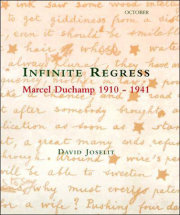
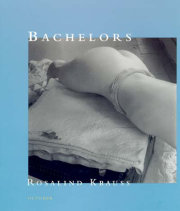
In celebration of Jewish American Heritage Month in May, we are sharing books by authors who share their individual stories, experiences, and lives. Find our full collection of books here.
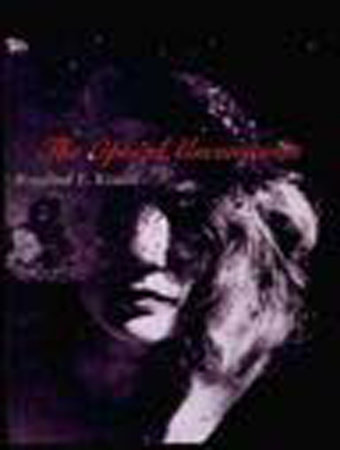
The Optical Unconscious will be deeply vexing to modernism's standard-bearers, and to readers who have accepted the foundational principles on which their aesthetic is based. Krauss also gives us the story that Alfred Barr, Meyer Shapiro, and Clement Greenberg repressed, the story of a small, disparate group of artists who defied modernism's most cherished self-descriptions, giving rise to an unruly, disruptive force that persistently haunted the field of modernism from the 1920s to the 1950s and continues to disrupt it today.
In order to understand why modernism had to repress the optical unconscious, Krauss eavesdrops on Roger Fry in the salons of Bloomsbury, and spies on the toddler John Ruskin as he amuses himself with the patterns of a rug; we find her in the living room of Clement Greenberg as he complains about "smart Jewish girls with their typewriters" in the 1960s, and in colloquy with Michael Fried about Frank Stella's love of baseball. Along the way, there are also narrative encounters with Freud, Jacques Lacan, Georges Bataille, Roger Caillois, Gilles Deleuze, and Jean-François Lyotard.
To embody this optical unconscious, Krauss turns to the pages of Max Ernst's collage novels, to Marcel Duchamp's hypnotic Rotoreliefs, to Eva Hesse's luminous sculptures, and to Cy Twombly's, Andy Warhol's, and Robert Morris's scandalous decoding of Jackson Pollock's drip pictures as "Anti-Form." These artists introduced a new set of values into the field of twentieth-century art, offering ready-made images of obsessional fantasy in place of modernism's intentionality and unexamined compulsions.

This is critical theory grounded in the viscera and in the libido. A minimum of academic jargon, a satisfying helping of lovely description, a surprising amount of good dirty sex, not to mention an all-star cast of characters—Greenberg, Pollock, Woolf, Warhol, Deleuze, Sartre, Artaud, Madonna, and Jung productively inhabit these pages—which add up to nothing less than a persuasive rewriting of 20th-century culture.
—Voice Literary Supplement—The Optical Unconscious will be deeply vexing to modernism's standard-bearers, and to readers who have accepted the foundational principles on which their aesthetic is based. Krauss also gives us the story that Alfred Barr, Meyer Shapiro, and Clement Greenberg repressed, the story of a small, disparate group of artists who defied modernism's most cherished self-descriptions, giving rise to an unruly, disruptive force that persistently haunted the field of modernism from the 1920s to the 1950s and continues to disrupt it today.
In order to understand why modernism had to repress the optical unconscious, Krauss eavesdrops on Roger Fry in the salons of Bloomsbury, and spies on the toddler John Ruskin as he amuses himself with the patterns of a rug; we find her in the living room of Clement Greenberg as he complains about "smart Jewish girls with their typewriters" in the 1960s, and in colloquy with Michael Fried about Frank Stella's love of baseball. Along the way, there are also narrative encounters with Freud, Jacques Lacan, Georges Bataille, Roger Caillois, Gilles Deleuze, and Jean-François Lyotard.
To embody this optical unconscious, Krauss turns to the pages of Max Ernst's collage novels, to Marcel Duchamp's hypnotic Rotoreliefs, to Eva Hesse's luminous sculptures, and to Cy Twombly's, Andy Warhol's, and Robert Morris's scandalous decoding of Jackson Pollock's drip pictures as "Anti-Form." These artists introduced a new set of values into the field of twentieth-century art, offering ready-made images of obsessional fantasy in place of modernism's intentionality and unexamined compulsions.
This is critical theory grounded in the viscera and in the libido. A minimum of academic jargon, a satisfying helping of lovely description, a surprising amount of good dirty sex, not to mention an all-star cast of characters—Greenberg, Pollock, Woolf, Warhol, Deleuze, Sartre, Artaud, Madonna, and Jung productively inhabit these pages—which add up to nothing less than a persuasive rewriting of 20th-century culture.
—Voice Literary Supplement—In celebration of Jewish American Heritage Month in May, we are sharing books by authors who share their individual stories, experiences, and lives. Find our full collection of books here.
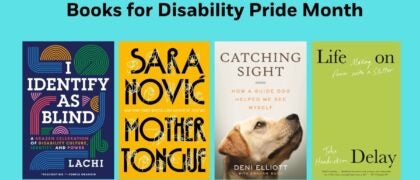

For Mental Health Awareness Month in May, we are sharing books to educate and raise awareness about mental health and the various factors that may affect it, and to provide tools and resources for student wellness. Find our full collection of titles here.
Each May, we honor the stories, histories, and cultures of Asian Americans, Native Hawaiians, and Pacific Islanders. Below is a selection of acclaimed fiction and nonfiction books by AANHPI creators to share with your students this month and throughout the year. Find our full collection of titles for Higher Education here.