
Books for Arab American Heritage Month
In honor of Arab American Heritage Month in April, we are sharing books by Arab and Arab American authors that share their culture, history, and personal lives.


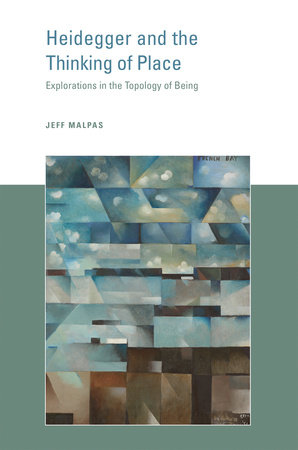
The idea of place—topos—runs through Martin Heidegger's thinking almost from the very start. It can be seen not only in his attachment to the famous hut in Todtnauberg but in his constant deployment of topological terms and images and in the situated, “placed” character of his thought and of its major themes and motifs. Heidegger's work, argues Jeff Malpas, exemplifies the practice of “philosophical topology.” In Heidegger and the Thinking of Place, Malpas examines the topological aspects of Heidegger's thought and offers a broader elaboration of the philosophical significance of place. Doing so, he provides a distinct and productive approach to Heidegger as well as a new reading of other key figures—notably Kant, Aristotle, Gadamer, and Davidson, but also Benjamin, Arendt, and Camus.
Malpas, expanding arguments he made in his earlier book Heidegger's Topology (MIT Press, 2007), discusses such topics as the role of place in philosophical thinking, the topological character of the transcendental, the convergence of Heideggerian topology with Davidsonian triangulation, the necessity of mortality in the possibility of human life, the role of materiality in the working of art, the significance of nostalgia, and the nature of philosophy as beginning in wonder. Philosophy, Malpas argues, begins in wonder and begins in place and the experience of place. The place of wonder, of philosophy, of questioning, he writes, is the very topos of thinking.
The idea of place—topos—runs through Martin Heidegger's thinking almost from the very start. It can be seen not only in his attachment to the famous hut in Todtnauberg but in his constant deployment of topological terms and images and in the situated, “placed” character of his thought and of its major themes and motifs. Heidegger's work, argues Jeff Malpas, exemplifies the practice of “philosophical topology.” In Heidegger and the Thinking of Place, Malpas examines the topological aspects of Heidegger's thought and offers a broader elaboration of the philosophical significance of place. Doing so, he provides a distinct and productive approach to Heidegger as well as a new reading of other key figures—notably Kant, Aristotle, Gadamer, and Davidson, but also Benjamin, Arendt, and Camus.
Malpas, expanding arguments he made in his earlier book Heidegger's Topology (MIT Press, 2007), discusses such topics as the role of place in philosophical thinking, the topological character of the transcendental, the convergence of Heideggerian topology with Davidsonian triangulation, the necessity of mortality in the possibility of human life, the role of materiality in the working of art, the significance of nostalgia, and the nature of philosophy as beginning in wonder. Philosophy, Malpas argues, begins in wonder and begins in place and the experience of place. The place of wonder, of philosophy, of questioning, he writes, is the very topos of thinking.
In honor of Arab American Heritage Month in April, we are sharing books by Arab and Arab American authors that share their culture, history, and personal lives.
For National Poetry Month in April, we are sharing poetry collections and books about poetry by authors who have their own stories to tell. These poets delve into history, reimagine the present, examine poetry itself—from traditional poems many know and love to poems and voices that are new and original.
/