Books for Arab American Heritage Month
In honor of Arab American Heritage Month in April, we are sharing books by Arab and Arab American authors that share their culture, history, and personal lives.
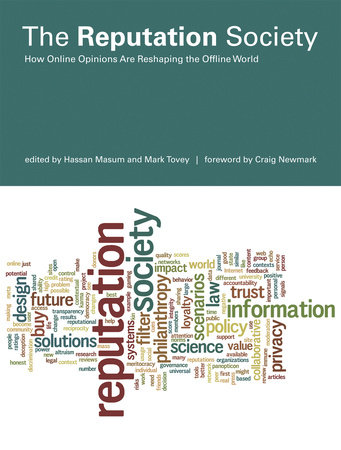
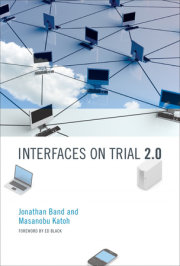
In making decisions, we often seek advice. Online, we check Amazon recommendations, eBay vendors' histories, TripAdvisor ratings, and even our elected representatives' voting records. These online reputation systems serve as filters for information overload. In this book, experts discuss the benefits and risks of such online tools.
The contributors offer expert perspectives that range from philanthropy and open access to science and law, addressing reputation systems in theory and practice. Properly designed reputation systems, they argue, have the potential to create a “reputation society,” reshaping society for the better by promoting accountability through the mediated judgments of billions of people. Effective design can also steer systems away from the pitfalls of online opinion sharing by motivating truth-telling, protecting personal privacy, and discouraging digital vigilantism.
Contributors
Madeline Ashby, Jamais Cascio, John Henry Clippinger, Chrysanthos Dellarocas, Cory Doctorow, Randy Farmer, Eric Goldman, Victor Henning, Anthony Hoffmann, Jason Hoyt, Luca Iandoli, Josh Introne, Mark Klein, Mari Kuraishi, Cliff Lampe, Paolo Massa, Hassan Masum, Marc Maxson, Craig Newmark, Michael Nielsen, Lucio Picci, Jan Reichelt, Alex Steffen, Lior Strahilevitz, Mark Tovey, John Whitfield, John Willinsky, Yi-Cheng Zhang, Michael Zimmer

The book contains a collection of essays exploring the development of online reputations from some of the field's leading experts and even a few thoughts from Internet pioneers like Craig Newmark, of craigslist.com fame.... Building reputation systems is the easy part. Figuring out the benefits and downfalls of their proliferation is where things get tricky, particularly because there are ratings systems that are useful, and some that are a lot less helpful.
—The Londoner—The carefully collected essays in this timely book provide readers with intelligent, multidisciplinary insights into the roles reputation and trust play in social systems...Overall, this book offers a very accessible yet rigorous introduction to reputation systems, while also covering several important subjects in great detail.
—ACM Computing Reviews—The premise of this book is an interesting one—not that reputation in itself is intrinsically valuable and thus worth pursuing, but that the structure of the online universe, the Internet in all its forms, is actually changing the way individuals and organizations are being perceived and treated....A very interesting book...
—World Future Review—In making decisions, we often seek advice. Online, we check Amazon recommendations, eBay vendors' histories, TripAdvisor ratings, and even our elected representatives' voting records. These online reputation systems serve as filters for information overload. In this book, experts discuss the benefits and risks of such online tools.
The contributors offer expert perspectives that range from philanthropy and open access to science and law, addressing reputation systems in theory and practice. Properly designed reputation systems, they argue, have the potential to create a “reputation society,” reshaping society for the better by promoting accountability through the mediated judgments of billions of people. Effective design can also steer systems away from the pitfalls of online opinion sharing by motivating truth-telling, protecting personal privacy, and discouraging digital vigilantism.
Contributors
Madeline Ashby, Jamais Cascio, John Henry Clippinger, Chrysanthos Dellarocas, Cory Doctorow, Randy Farmer, Eric Goldman, Victor Henning, Anthony Hoffmann, Jason Hoyt, Luca Iandoli, Josh Introne, Mark Klein, Mari Kuraishi, Cliff Lampe, Paolo Massa, Hassan Masum, Marc Maxson, Craig Newmark, Michael Nielsen, Lucio Picci, Jan Reichelt, Alex Steffen, Lior Strahilevitz, Mark Tovey, John Whitfield, John Willinsky, Yi-Cheng Zhang, Michael Zimmer
The book contains a collection of essays exploring the development of online reputations from some of the field's leading experts and even a few thoughts from Internet pioneers like Craig Newmark, of craigslist.com fame.... Building reputation systems is the easy part. Figuring out the benefits and downfalls of their proliferation is where things get tricky, particularly because there are ratings systems that are useful, and some that are a lot less helpful.
—The Londoner—The carefully collected essays in this timely book provide readers with intelligent, multidisciplinary insights into the roles reputation and trust play in social systems...Overall, this book offers a very accessible yet rigorous introduction to reputation systems, while also covering several important subjects in great detail.
—ACM Computing Reviews—The premise of this book is an interesting one—not that reputation in itself is intrinsically valuable and thus worth pursuing, but that the structure of the online universe, the Internet in all its forms, is actually changing the way individuals and organizations are being perceived and treated....A very interesting book...
—World Future Review—In honor of Arab American Heritage Month in April, we are sharing books by Arab and Arab American authors that share their culture, history, and personal lives.
For National Poetry Month in April, we are sharing poetry collections and books about poetry by authors who have their own stories to tell. These poets delve into history, reimagine the present, examine poetry itself—from traditional poems many know and love to poems and voices that are new and original.