
Books for Jewish American Heritage Month
In celebration of Jewish American Heritage Month in May, we are sharing books by authors who share their individual stories, experiences, and lives. Find our full collection of books here.


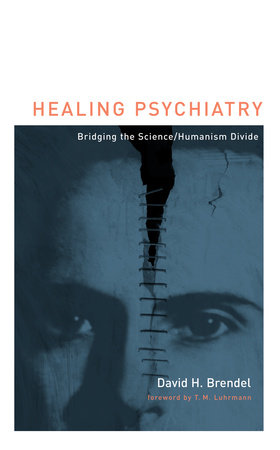
Psychiatry today is torn by opposing sensibilities. Is it primarily a science of brain functioning or primarily an art of understanding the human mind in its social and cultural context? Competing conceptions of mental illness as amenable to scientific explanation or as deeply complex and beyond the reach of empirical study have left the field conceptually divided between science and humanism. In Healing Psychiatry David Brendel takes a novel approach to this stubborn problem. Drawing on the classical American pragmatism of Charles Sanders Peirce, William James, and John Dewey, as well as contemporary work of pragmatic bioethicists, Brendel proposes a "clinical pragmatism" that synthesizes scientific and humanistic approaches to mental health care. Psychiatry, he argues, must integrate scientific and humanistic models by emphasizing the practical, pluralistic, participatory, and provisional aspects of clinical diagnosis and treatment. Psychiatrists need to have the skill and flexibility to use scientific and humanistic approaches in a collaborative, open-ended clinical process; they must recognize the complexity of human suffering even as they strive for scientific rigor. This is the only way, he writes, that psychiatry can heal its conceptual rift and the emotional wounds of its patients.
Healing Psychiatry explores these issues from both clinical and theoretical standpoints and uses case histories to support its basic argument. Brendel calls for an open-minded and flexible yet scientifically informed approach to understanding, diagnosing, and treating mental disorders. And he considers the future of psychiatry, applying the principles of clinical pragmatism to a broad range of ethical concerns in psychiatric training and research.
The approach throughout is thoughtful, well-reasoned, and persuasive. Psychiatrists, psychoanalysts, and all mental health professionals will find it informative and challenging.
—The Bulletin of the Menninger Clinic—Psychiatry today is torn by opposing sensibilities. Is it primarily a science of brain functioning or primarily an art of understanding the human mind in its social and cultural context? Competing conceptions of mental illness as amenable to scientific explanation or as deeply complex and beyond the reach of empirical study have left the field conceptually divided between science and humanism. In Healing Psychiatry David Brendel takes a novel approach to this stubborn problem. Drawing on the classical American pragmatism of Charles Sanders Peirce, William James, and John Dewey, as well as contemporary work of pragmatic bioethicists, Brendel proposes a "clinical pragmatism" that synthesizes scientific and humanistic approaches to mental health care. Psychiatry, he argues, must integrate scientific and humanistic models by emphasizing the practical, pluralistic, participatory, and provisional aspects of clinical diagnosis and treatment. Psychiatrists need to have the skill and flexibility to use scientific and humanistic approaches in a collaborative, open-ended clinical process; they must recognize the complexity of human suffering even as they strive for scientific rigor. This is the only way, he writes, that psychiatry can heal its conceptual rift and the emotional wounds of its patients.
Healing Psychiatry explores these issues from both clinical and theoretical standpoints and uses case histories to support its basic argument. Brendel calls for an open-minded and flexible yet scientifically informed approach to understanding, diagnosing, and treating mental disorders. And he considers the future of psychiatry, applying the principles of clinical pragmatism to a broad range of ethical concerns in psychiatric training and research.
The approach throughout is thoughtful, well-reasoned, and persuasive. Psychiatrists, psychoanalysts, and all mental health professionals will find it informative and challenging.
—The Bulletin of the Menninger Clinic—






























In celebration of Jewish American Heritage Month in May, we are sharing books by authors who share their individual stories, experiences, and lives. Find our full collection of books here.
For Mental Health Awareness Month in May, we are sharing books to educate and raise awareness about mental health and the various factors that may affect it, and to provide tools and resources for student wellness. Find our full collection of titles here.
Each May, we honor the stories, histories, and cultures of Asian Americans, Native Hawaiians, and Pacific Islanders. Below is a selection of acclaimed fiction and nonfiction books by AANHPI creators to share with your students this month and throughout the year. Find our full collection of titles for Higher Education here.