
Books for Arab American Heritage Month
In honor of Arab American Heritage Month in April, we are sharing books by Arab and Arab American authors that share their culture, history, and personal lives.


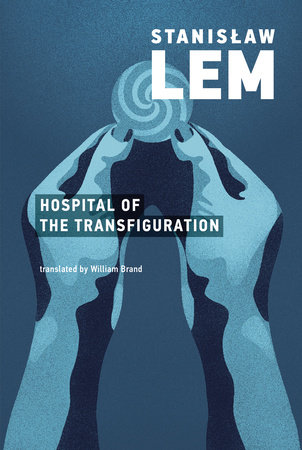
Taking place within the confines of a psychiatric hospital, Stanisław Lem's The Hospital of the Transfiguration tells the story of a young doctor working in a Polish asylum during World War II. At first the asylum seems like a bucolic refuge, but a series of sinister encounters and incidents reveal an underlying brutality. The doctor begins to seek relief in the strange conversation of the poet Sekulowski, who is posing as a patient in a bid for safety from the occupying German forces. Meanwhile, Resistance fighters stockpile weapons in the surrounding woods.
A very early work by Lem, The Hospital of the Transfiguration is partly autobiographical, drawing on the author's experiences as a medical student. Written in 1948, it was suppressed by Polish censors and not published until 1955. The censorship of this realist novel is partly what led Lem to focus on science fiction and nonfiction for the rest of his career.
“Lem carefully develops his characters before he etches them away with the stresses of war, showing them as archetypes of courage, cowardice, perfidy, and love.” —Village Voice
“A phenomenon called Lem did not grow into a writer, but sprang from the head of Zeus like Athena, full armed; but with a portable Remington instead of a spear.” —Bloomsbury Review
"The release of these new volumes seems to expand the possibilities of what a university publisher can do." —LitHub
"Fourteen years after his death, the universe is still struggling to catch up with the vast creative force that was Stanisław Lem. And for my money, it won't be surpassing him anytime soon…Enjoying the genius of Lem requires readerly dexterity and a willingness to go wherever the author takes you…These marvelous, absorbing and often hilarious books make our weary universe seem pale and undistinguished by comparison." —The Washington Post
Taking place within the confines of a psychiatric hospital, Stanisław Lem's The Hospital of the Transfiguration tells the story of a young doctor working in a Polish asylum during World War II. At first the asylum seems like a bucolic refuge, but a series of sinister encounters and incidents reveal an underlying brutality. The doctor begins to seek relief in the strange conversation of the poet Sekulowski, who is posing as a patient in a bid for safety from the occupying German forces. Meanwhile, Resistance fighters stockpile weapons in the surrounding woods.
A very early work by Lem, The Hospital of the Transfiguration is partly autobiographical, drawing on the author's experiences as a medical student. Written in 1948, it was suppressed by Polish censors and not published until 1955. The censorship of this realist novel is partly what led Lem to focus on science fiction and nonfiction for the rest of his career.
“Lem carefully develops his characters before he etches them away with the stresses of war, showing them as archetypes of courage, cowardice, perfidy, and love.” —Village Voice
“A phenomenon called Lem did not grow into a writer, but sprang from the head of Zeus like Athena, full armed; but with a portable Remington instead of a spear.” —Bloomsbury Review
"The release of these new volumes seems to expand the possibilities of what a university publisher can do." —LitHub
"Fourteen years after his death, the universe is still struggling to catch up with the vast creative force that was Stanisław Lem. And for my money, it won't be surpassing him anytime soon…Enjoying the genius of Lem requires readerly dexterity and a willingness to go wherever the author takes you…These marvelous, absorbing and often hilarious books make our weary universe seem pale and undistinguished by comparison." —The Washington Post


In honor of Arab American Heritage Month in April, we are sharing books by Arab and Arab American authors that share their culture, history, and personal lives.
For National Poetry Month in April, we are sharing poetry collections and books about poetry by authors who have their own stories to tell. These poets delve into history, reimagine the present, examine poetry itself—from traditional poems many know and love to poems and voices that are new and original.