
Books for Arab American Heritage Month
In honor of Arab American Heritage Month in April, we are sharing books by Arab and Arab American authors that share their culture, history, and personal lives.


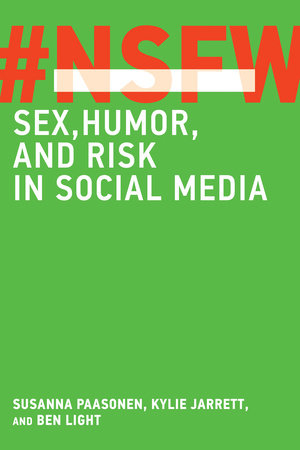
The hashtag #NSFW (not safe for work) acts as both a warning and an invitation. NSFW tells users, “We dare you to click on this link! And by the way, don't do it until after work!” Unlike the specificity of movie and television advisories (“suggestive dialogue,” “sexual content”), NSFW signals, nonspecifically, sexually explicit content that ranges from nude selfies to pornography. NSFW looks at how and why social media content is tagged “not safe” and shows how this serves to conflate sexual content and risk. The authors argue that the notion of “unsafety” extends beyond the risk of losing one's job or being embarrassed at work to an unspecified sense of risk attached to sexually explicit media content and sexual communication in general.
The authors examine NSFW practices of tagging and flagging on a range of social media platforms; online pornography and its dependence on technology; user-generated NSFW content—in particular, the dick pic and associated issues of consent, desire, agency, and social power; the deployment of risqué humor in the workplace; and sexist and misogynist online harassment that functions as an enforcer of inequalities. They argue against the categorical effacement of sexual content by means of an all-purpose hashtag and urge us to shift considerations of safety from pictorial properties to issues of context and consent.
The hashtag #NSFW (not safe for work) acts as both a warning and an invitation. NSFW tells users, “We dare you to click on this link! And by the way, don't do it until after work!” Unlike the specificity of movie and television advisories (“suggestive dialogue,” “sexual content”), NSFW signals, nonspecifically, sexually explicit content that ranges from nude selfies to pornography. NSFW looks at how and why social media content is tagged “not safe” and shows how this serves to conflate sexual content and risk. The authors argue that the notion of “unsafety” extends beyond the risk of losing one's job or being embarrassed at work to an unspecified sense of risk attached to sexually explicit media content and sexual communication in general.
The authors examine NSFW practices of tagging and flagging on a range of social media platforms; online pornography and its dependence on technology; user-generated NSFW content—in particular, the dick pic and associated issues of consent, desire, agency, and social power; the deployment of risqué humor in the workplace; and sexist and misogynist online harassment that functions as an enforcer of inequalities. They argue against the categorical effacement of sexual content by means of an all-purpose hashtag and urge us to shift considerations of safety from pictorial properties to issues of context and consent.

In honor of Arab American Heritage Month in April, we are sharing books by Arab and Arab American authors that share their culture, history, and personal lives.
For National Poetry Month in April, we are sharing poetry collections and books about poetry by authors who have their own stories to tell. These poets delve into history, reimagine the present, examine poetry itself—from traditional poems many know and love to poems and voices that are new and original.