
Books for Arab American Heritage Month
In honor of Arab American Heritage Month in April, we are sharing books by Arab and Arab American authors that share their culture, history, and personal lives.


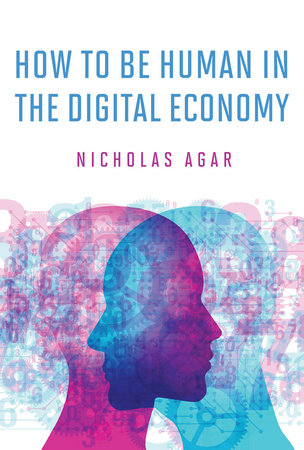
In the digital economy, accountants, baristas, and cashiers can be automated out of employment; so can surgeons, airline pilots, and cab drivers. Machines will be able to do these jobs more efficiently, accurately, and inexpensively. But, Nicholas Agar warns in this provocative book, these developments could result in a radically disempowered humanity.
The digital revolution has brought us new gadgets and new things to do with them. The digital revolution also brings the digital economy, with machines capable of doing humans' jobs. Agar explains that developments in artificial intelligence enable computers to take over not just routine tasks but also the kind of “mind work” that previously relied on human intellect, and that this threatens human agency. The solution, Agar argues, is a hybrid social-digital economy. The key value of the digital economy is efficiency. The key value of the social economy is humanness.
A social economy would be centered on connections between human minds. We should reject some digital automation because machines will always be poor substitutes for humans in roles that involve direct contact with other humans. A machine can count out pills and pour out coffee, but we want our nurses and baristas to have minds like ours. In a hybrid social-digital economy, people do the jobs for which feelings matter and machines take on data-intensive work. But humans will have to insist on their relevance in a digital age.
In the digital economy, accountants, baristas, and cashiers can be automated out of employment; so can surgeons, airline pilots, and cab drivers. Machines will be able to do these jobs more efficiently, accurately, and inexpensively. But, Nicholas Agar warns in this provocative book, these developments could result in a radically disempowered humanity.
The digital revolution has brought us new gadgets and new things to do with them. The digital revolution also brings the digital economy, with machines capable of doing humans' jobs. Agar explains that developments in artificial intelligence enable computers to take over not just routine tasks but also the kind of “mind work” that previously relied on human intellect, and that this threatens human agency. The solution, Agar argues, is a hybrid social-digital economy. The key value of the digital economy is efficiency. The key value of the social economy is humanness.
A social economy would be centered on connections between human minds. We should reject some digital automation because machines will always be poor substitutes for humans in roles that involve direct contact with other humans. A machine can count out pills and pour out coffee, but we want our nurses and baristas to have minds like ours. In a hybrid social-digital economy, people do the jobs for which feelings matter and machines take on data-intensive work. But humans will have to insist on their relevance in a digital age.

In honor of Arab American Heritage Month in April, we are sharing books by Arab and Arab American authors that share their culture, history, and personal lives.
For National Poetry Month in April, we are sharing poetry collections and books about poetry by authors who have their own stories to tell. These poets delve into history, reimagine the present, examine poetry itself—from traditional poems many know and love to poems and voices that are new and original.