
Books for Jewish American Heritage Month
In celebration of Jewish American Heritage Month in May, we are sharing books by authors who share their individual stories, experiences, and lives. Find our full collection of books here.


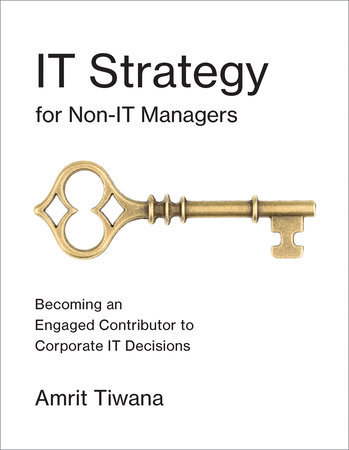
Firms spend more on information technology (IT) than on all other capital assets combined. And yet despite this significant cash outlay, businesses often end up with IT that is uneconomical and strategically feeble. What is missing in many organizations' IT strategy is the business acumen of managers from non-IT departments. This book presents tools for non-IT managers to turn IT from an expensive liability into a cost-effective competitive tool. It equips readers with the concepts and analytical skills necessary to understand IT needs and opportunities from both sides of the business–IT divide.
Each chapter opens with a jargon decoder–nontechnical explanations of the key ideas in the chapter—and ends with a checklist summarizing non-IT factors to consider in IT decisions. Chapters cover such topics as infusing competitive firepower into IT strategy; amalgamating software and data for a hard-to-duplicate competitive advantage; making choices that meet today's business needs without handicapping future strategy; establishing who decides what about IT strategies; sourcing IT and its challenges; protecting IT assets against disaster in ways that IT professionals cannot; and recognizing the business potential of emerging technologies. Examples are drawn from large corporations, small businesses, and nonprofits around the world.
The book is suitable for use in the MBA core IT course, and is aimed especially at students in professional or executive MBA programs. It will also be a valuable reference for managers.
Firms spend more on information technology (IT) than on all other capital assets combined. And yet despite this significant cash outlay, businesses often end up with IT that is uneconomical and strategically feeble. What is missing in many organizations' IT strategy is the business acumen of managers from non-IT departments. This book presents tools for non-IT managers to turn IT from an expensive liability into a cost-effective competitive tool. It equips readers with the concepts and analytical skills necessary to understand IT needs and opportunities from both sides of the business–IT divide.
Each chapter opens with a jargon decoder–nontechnical explanations of the key ideas in the chapter—and ends with a checklist summarizing non-IT factors to consider in IT decisions. Chapters cover such topics as infusing competitive firepower into IT strategy; amalgamating software and data for a hard-to-duplicate competitive advantage; making choices that meet today's business needs without handicapping future strategy; establishing who decides what about IT strategies; sourcing IT and its challenges; protecting IT assets against disaster in ways that IT professionals cannot; and recognizing the business potential of emerging technologies. Examples are drawn from large corporations, small businesses, and nonprofits around the world.
The book is suitable for use in the MBA core IT course, and is aimed especially at students in professional or executive MBA programs. It will also be a valuable reference for managers.


In celebration of Jewish American Heritage Month in May, we are sharing books by authors who share their individual stories, experiences, and lives. Find our full collection of books here.
For Mental Health Awareness Month in May, we are sharing books to educate and raise awareness about mental health and the various factors that may affect it, and to provide tools and resources for student wellness. Find our full collection of titles here.
Each May, we honor the stories, histories, and cultures of Asian Americans, Native Hawaiians, and Pacific Islanders. Below is a selection of acclaimed fiction and nonfiction books by AANHPI creators to share with your students this month and throughout the year. Find our full collection of titles for Higher Education here.