Books for Arab American Heritage Month
In honor of Arab American Heritage Month in April, we are sharing books by Arab and Arab American authors that share their culture, history, and personal lives.
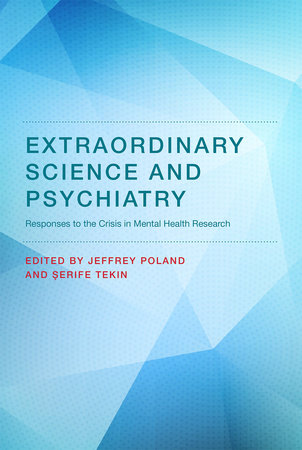
Psychiatry and mental health research is in crisis, with tensions between psychiatry's clinical and research aims and controversies over diagnosis, treatment, and scientific constructs for studying mental disorders. At the center of these controversies is the Diagnostic and Statistical Manual of Mental Disorders (DSM), which—especially after the publication of DSM-5—many have found seriously flawed as a guide for research. This book addresses the crisis and the associated “extraordinary science” (Thomas Kuhn's term for scientific research during a state of crisis) from the perspective of philosophy of science. The goal is to help reconcile the competing claims of science and phenomenology within psychiatry and to offer new insights for the philosophy of science.
The contributors discuss the epistemological origins of the current crisis, the nature of evidence in psychiatric research, and the National Institute for Mental Health's Research Domain Criteria project. They consider particular research practices in psychiatry—computational, personalized, mechanistic, and user-led—and the specific categories of schizophrenia, depressive disorder, and bipolar disorder. Finally, they examine the DSM's dubious practice of pathologizing normality.
Contributors
Richard P. Bentall, John Bickle, Robyn Bluhm, Rachel Cooper, Kelso Cratsley, Owen Flanagan, Michael Frank, George Graham, Ginger A. Hoffman, Harold Kincaid, Aaron Kostko, Edouard Machery, Jeffrey Poland, Claire Pouncey, Şerife Tekin, Peter Zachar

Psychiatry and mental health research is in crisis, with tensions between psychiatry's clinical and research aims and controversies over diagnosis, treatment, and scientific constructs for studying mental disorders. At the center of these controversies is the Diagnostic and Statistical Manual of Mental Disorders (DSM), which—especially after the publication of DSM-5—many have found seriously flawed as a guide for research. This book addresses the crisis and the associated “extraordinary science” (Thomas Kuhn's term for scientific research during a state of crisis) from the perspective of philosophy of science. The goal is to help reconcile the competing claims of science and phenomenology within psychiatry and to offer new insights for the philosophy of science.
The contributors discuss the epistemological origins of the current crisis, the nature of evidence in psychiatric research, and the National Institute for Mental Health's Research Domain Criteria project. They consider particular research practices in psychiatry—computational, personalized, mechanistic, and user-led—and the specific categories of schizophrenia, depressive disorder, and bipolar disorder. Finally, they examine the DSM's dubious practice of pathologizing normality.
Contributors
Richard P. Bentall, John Bickle, Robyn Bluhm, Rachel Cooper, Kelso Cratsley, Owen Flanagan, Michael Frank, George Graham, Ginger A. Hoffman, Harold Kincaid, Aaron Kostko, Edouard Machery, Jeffrey Poland, Claire Pouncey, Şerife Tekin, Peter Zachar
In honor of Arab American Heritage Month in April, we are sharing books by Arab and Arab American authors that share their culture, history, and personal lives.
For National Poetry Month in April, we are sharing poetry collections and books about poetry by authors who have their own stories to tell. These poets delve into history, reimagine the present, examine poetry itself—from traditional poems many know and love to poems and voices that are new and original.