Books for Arab American Heritage Month
In honor of Arab American Heritage Month in April, we are sharing books by Arab and Arab American authors that share their culture, history, and personal lives.
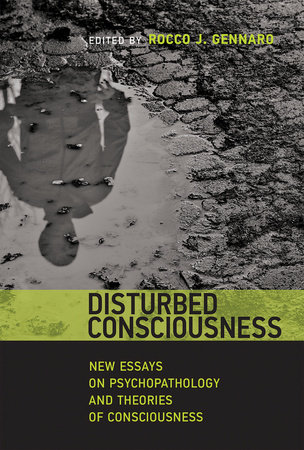
In Disturbed Consciousness, philosophers and other scholars examine various psychopathologies in light of specific philosophical theories of consciousness. The contributing authors—some of them discussing or defending their own theoretical work—consider not only how a theory of consciousness can account for a specific psychopathological condition but also how the characteristics of a psychopathology might challenge such a theory. Thus one essay defends the higher-order thought (HOT) theory of consciousness against the charge that it cannot account for somatoparaphrenia (a delusion in which one denies ownership of a limb). Another essay argues that various attempts to explain away such anomalies within subjective theories of consciousness fail.
Other essays consider such topics as the application of a model of unified consciousness to cases of brain bisection and dissociative identity disorder; prefrontal and parietal underconnectivity in autism and other psychopathologies; self-deception and the self-model theory of subjectivity; schizophrenia and the vehicle theory of consciousness; and a shift in emphasis away from an internal (or brainbound) approach to psychopathology to an interactive one. Each essay offers a distinctive perspective from the intersection of philosophy, consciousness research, and psychiatry.
Contributors
Alexandre Billon, Andrew Brook, Paula Droege, Rocco J. Gennaro, Philip Gerrans, William Hirstein, Jakob Hohwy, Uriah Kriegel, Timothy Lane, Thomas Metzinger, Erik Myin, Inez Myin-Germeys, Myrto Mylopoulos, Gerard O'Brien, Jon Opie, J. Kevin O'Regan, Iuliia Pliushch, Robert Van Gulick

In Disturbed Consciousness, philosophers and other scholars examine various psychopathologies in light of specific philosophical theories of consciousness. The contributing authors—some of them discussing or defending their own theoretical work—consider not only how a theory of consciousness can account for a specific psychopathological condition but also how the characteristics of a psychopathology might challenge such a theory. Thus one essay defends the higher-order thought (HOT) theory of consciousness against the charge that it cannot account for somatoparaphrenia (a delusion in which one denies ownership of a limb). Another essay argues that various attempts to explain away such anomalies within subjective theories of consciousness fail.
Other essays consider such topics as the application of a model of unified consciousness to cases of brain bisection and dissociative identity disorder; prefrontal and parietal underconnectivity in autism and other psychopathologies; self-deception and the self-model theory of subjectivity; schizophrenia and the vehicle theory of consciousness; and a shift in emphasis away from an internal (or brainbound) approach to psychopathology to an interactive one. Each essay offers a distinctive perspective from the intersection of philosophy, consciousness research, and psychiatry.
Contributors
Alexandre Billon, Andrew Brook, Paula Droege, Rocco J. Gennaro, Philip Gerrans, William Hirstein, Jakob Hohwy, Uriah Kriegel, Timothy Lane, Thomas Metzinger, Erik Myin, Inez Myin-Germeys, Myrto Mylopoulos, Gerard O'Brien, Jon Opie, J. Kevin O'Regan, Iuliia Pliushch, Robert Van Gulick
In honor of Arab American Heritage Month in April, we are sharing books by Arab and Arab American authors that share their culture, history, and personal lives.
For National Poetry Month in April, we are sharing poetry collections and books about poetry by authors who have their own stories to tell. These poets delve into history, reimagine the present, examine poetry itself—from traditional poems many know and love to poems and voices that are new and original.