
Books for Jewish American Heritage Month
In celebration of Jewish American Heritage Month in May, we are sharing books by authors who share their individual stories, experiences, and lives. Find our full collection of books here.
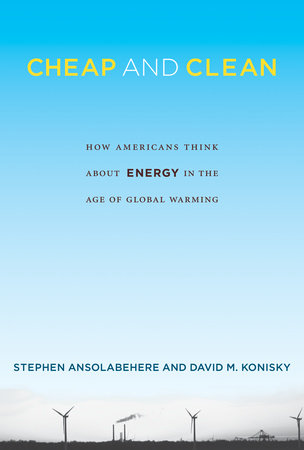
How do Americans think about energy? Is the debate over fossil fuels highly partisan and ideological? Does public opinion about fossil fuels and alternative energies divide along the fault between red states and blue states? And how much do concerns about climate change weigh on their opinions? In Cheap and Clean, Stephen Ansolabehere and David Konisky show that Americans are more pragmatic than ideological in their opinions about energy alternatives, more unified than divided about their main concerns, and more local than global in their approach to energy.
Drawing on extensive surveys they designed and conducted over the course of a decade (in conjunction with MIT's Energy Initiative), Ansolabehere and Konisky report that beliefs about the costs and environmental harms associated with particular fuels drive public opinions about energy. People approach energy choices as consumers, and what is most important to them is simply that energy be cheap and clean. Most of us want energy at low economic cost and with little social cost (that is, minimal health risk from pollution). The authors also find that although environmental concerns weigh heavily in people's energy preferences, these concerns are local and not global. Worries about global warming are less pressing to most than worries about their own city's smog and toxic waste. With this in mind, Ansolabehere and Konisky argue for policies that target both local pollutants and carbon emissions (the main source of global warming). The local and immediate nature of people's energy concerns can be the starting point for a new approach to energy and climate change policy.
How do Americans think about energy? Is the debate over fossil fuels highly partisan and ideological? Does public opinion about fossil fuels and alternative energies divide along the fault between red states and blue states? And how much do concerns about climate change weigh on their opinions? In Cheap and Clean, Stephen Ansolabehere and David Konisky show that Americans are more pragmatic than ideological in their opinions about energy alternatives, more unified than divided about their main concerns, and more local than global in their approach to energy.
Drawing on extensive surveys they designed and conducted over the course of a decade (in conjunction with MIT's Energy Initiative), Ansolabehere and Konisky report that beliefs about the costs and environmental harms associated with particular fuels drive public opinions about energy. People approach energy choices as consumers, and what is most important to them is simply that energy be cheap and clean. Most of us want energy at low economic cost and with little social cost (that is, minimal health risk from pollution). The authors also find that although environmental concerns weigh heavily in people's energy preferences, these concerns are local and not global. Worries about global warming are less pressing to most than worries about their own city's smog and toxic waste. With this in mind, Ansolabehere and Konisky argue for policies that target both local pollutants and carbon emissions (the main source of global warming). The local and immediate nature of people's energy concerns can be the starting point for a new approach to energy and climate change policy.
In celebration of Jewish American Heritage Month in May, we are sharing books by authors who share their individual stories, experiences, and lives. Find our full collection of books here.
For Mental Health Awareness Month in May, we are sharing books to educate and raise awareness about mental health and the various factors that may affect it, and to provide tools and resources for student wellness. Find our full collection of titles here.
Each May, we honor the stories, histories, and cultures of Asian Americans, Native Hawaiians, and Pacific Islanders. Below is a selection of acclaimed fiction and nonfiction books by AANHPI creators to share with your students this month and throughout the year. Find our full collection of titles for Higher Education here.