
Books for Jewish American Heritage Month
In celebration of Jewish American Heritage Month in May, we are sharing books by authors who share their individual stories, experiences, and lives. Find our full collection of books here.


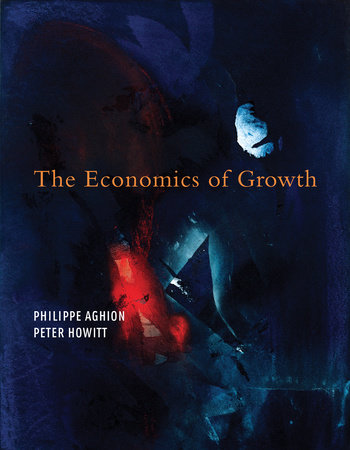
This comprehensive introduction to economic growth presents the main facts and puzzles about growth, proposes simple methods and models needed to explain these facts, acquaints the reader with the most recent theoretical and empirical developments, and provides tools with which to analyze policy design. The treatment of growth theory is fully accessible to students with a background no more advanced than elementary calculus and probability theory; the reader need not master all the subtleties of dynamic programming and stochastic processes to learn what is essential about such issues as cross-country convergence, the effects of financial development on growth, and the consequences of globalization. The book, which grew out of courses taught by the authors at Harvard and Brown universities, can be used both by advanced undergraduate and graduate students, and as a reference for professional economists in government or international financial organizations.
The Economics of Growth first presents the main growth paradigms: the neoclassical model, the AK model, Romer's product variety model, and the Schumpeterian model. The text then builds on the main paradigms to shed light on the dynamic process of growth and development, discussing such topics as club convergence, directed technical change, the transition from Malthusian stagnation to sustained growth, general purpose technologies, and the recent debate over institutions versus human capital as the primary factor in cross-country income differences. Finally, the book focuses on growth policies—analyzing the effects of liberalizing market competition and entry, education policy, trade liberalization, environmental and resource constraints, and stabilization policy—and the methodology of growth policy design. All chapters include literature reviews and problem sets. An appendix covers basic concepts of econometrics.
This comprehensive introduction to economic growth presents the main facts and puzzles about growth, proposes simple methods and models needed to explain these facts, acquaints the reader with the most recent theoretical and empirical developments, and provides tools with which to analyze policy design. The treatment of growth theory is fully accessible to students with a background no more advanced than elementary calculus and probability theory; the reader need not master all the subtleties of dynamic programming and stochastic processes to learn what is essential about such issues as cross-country convergence, the effects of financial development on growth, and the consequences of globalization. The book, which grew out of courses taught by the authors at Harvard and Brown universities, can be used both by advanced undergraduate and graduate students, and as a reference for professional economists in government or international financial organizations.
The Economics of Growth first presents the main growth paradigms: the neoclassical model, the AK model, Romer's product variety model, and the Schumpeterian model. The text then builds on the main paradigms to shed light on the dynamic process of growth and development, discussing such topics as club convergence, directed technical change, the transition from Malthusian stagnation to sustained growth, general purpose technologies, and the recent debate over institutions versus human capital as the primary factor in cross-country income differences. Finally, the book focuses on growth policies—analyzing the effects of liberalizing market competition and entry, education policy, trade liberalization, environmental and resource constraints, and stabilization policy—and the methodology of growth policy design. All chapters include literature reviews and problem sets. An appendix covers basic concepts of econometrics.


In celebration of Jewish American Heritage Month in May, we are sharing books by authors who share their individual stories, experiences, and lives. Find our full collection of books here.
For Mental Health Awareness Month in May, we are sharing books to educate and raise awareness about mental health and the various factors that may affect it, and to provide tools and resources for student wellness. Find our full collection of titles here.
Each May, we honor the stories, histories, and cultures of Asian Americans, Native Hawaiians, and Pacific Islanders. Below is a selection of acclaimed fiction and nonfiction books by AANHPI creators to share with your students this month and throughout the year. Find our full collection of titles for Higher Education here.