









Soviet Blocks

The Bizarre Puzzle of How Tetris Embraced Western Values

A geopolitical and legal history of the bestselling videogame Tetris—the stunningly successful game that began in a Soviet research lab monitored by the KGB.

Tetris—the game that would take the world by storm—was formally introduced to the West in 1987, at a time when Soviet technology exports were minimal and the Berlin Wall was still standing strong. Far from being a capitalist cultural product, the game had actually been designed in a Soviet computer lab tightly monitored by the KGB, at a time when Ronald Reagan referred to the USSR as the “evil empire.” 

So, how did Tetris jump the wall to become such a blockbuster? And why does a US company, The Tetris Company (TTC), now own the game, when it was the property of Mother Russia? Why has TTC been able to monopolize both the shape of the pieces which predated Tetris and the very concept of an electronic puzzle game with falling pieces, which flies in the face of traditional copyright law? Why and how have Soviet socialists morphed into hardcore capitalists? In Soviet Blocks, Julien Mailland answers these questions and more, explaining the fascinating history of Tetris’ commercial success as a story of two systems radically opposed in histories, cultures, economics, and politics.
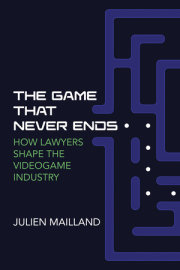
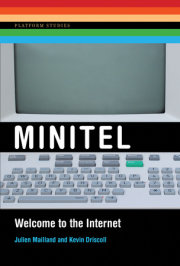
Julien Mailland is a technology industry attorney, Associate Professor of Media Law & Management at the Indiana University Media School, Adjunct Associate Professor of Informatics at the Indiana University Luddy School of Informatics, Computing, and Engineering, and Associate Editor of The Information Society. He is the author of The Game That Never Ends and coauthor of Minitel (both MIT Press).
ENDORSEMENTS

“A compelling read, and a remarkable story. I started reading it and it hooked me immediately. You may think you know the history of Tetris, but the real story is crazier than anything you—or Hollywood—could have imagined.”
—Mark Lemley, William H. Neukom Professor of Law, Stanford Law School

“Hiding behind Tetris’s elegant simplicity lies a tangled production history. In Soviet Blocks, Julien Mailland arranges evidence like so many falling tetrominoes to tell the story of how a Cold War plaything attracted competing origin stories and claims of authorship as it became a lucrative property in the capitalist West. This is a must-read for game studies and legal studies scholars alike.”
—Matthew Thomas Payne, author of Eugene Jarvis: King of the Arcade and Playing War

About

A geopolitical and legal history of the bestselling videogame Tetris—the stunningly successful game that began in a Soviet research lab monitored by the KGB.

Tetris—the game that would take the world by storm—was formally introduced to the West in 1987, at a time when Soviet technology exports were minimal and the Berlin Wall was still standing strong. Far from being a capitalist cultural product, the game had actually been designed in a Soviet computer lab tightly monitored by the KGB, at a time when Ronald Reagan referred to the USSR as the “evil empire.” 

So, how did Tetris jump the wall to become such a blockbuster? And why does a US company, The Tetris Company (TTC), now own the game, when it was the property of Mother Russia? Why has TTC been able to monopolize both the shape of the pieces which predated Tetris and the very concept of an electronic puzzle game with falling pieces, which flies in the face of traditional copyright law? Why and how have Soviet socialists morphed into hardcore capitalists? In Soviet Blocks, Julien Mailland answers these questions and more, explaining the fascinating history of Tetris’ commercial success as a story of two systems radically opposed in histories, cultures, economics, and politics.

Author

Julien Mailland is a technology industry attorney, Associate Professor of Media Law & Management at the Indiana University Media School, Adjunct Associate Professor of Informatics at the Indiana University Luddy School of Informatics, Computing, and Engineering, and Associate Editor of The Information Society. He is the author of The Game That Never Ends and coauthor of Minitel (both MIT Press).

Praise

ENDORSEMENTS

“A compelling read, and a remarkable story. I started reading it and it hooked me immediately. You may think you know the history of Tetris, but the real story is crazier than anything you—or Hollywood—could have imagined.”
—Mark Lemley, William H. Neukom Professor of Law, Stanford Law School

“Hiding behind Tetris’s elegant simplicity lies a tangled production history. In Soviet Blocks, Julien Mailland arranges evidence like so many falling tetrominoes to tell the story of how a Cold War plaything attracted competing origin stories and claims of authorship as it became a lucrative property in the capitalist West. This is a must-read for game studies and legal studies scholars alike.”
—Matthew Thomas Payne, author of Eugene Jarvis: King of the Arcade and Playing War

Books for LGBTQIA+ Pride Month

In June we celebrate Lesbian, Gay, Bisexual, Transgender, Queer, Intersex, and Asexual + (LGBTQIA+) Pride Month, which honors the 1969 Stonewall riots in Manhattan. Pride Month is a time to both celebrate the accomplishments of those in the LGBTQ+ community and recognize the ongoing struggles faced by many across the world who wish to live

Read more