
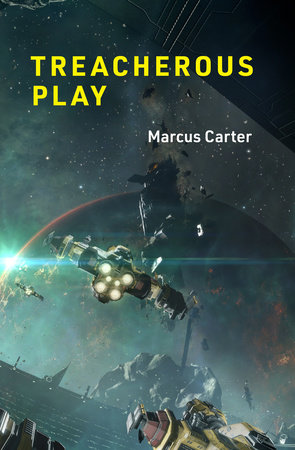








Treacherous Play

Look inside
Hardcover
$25.00 US
On sale Feb 01, 2022 | 152 Pages | 9780262046312

See Additional Formats
Examining the ethics and experience of “treacherous play” through 3 games that allow deception and betrayal—EVE Online, DayZ, and the TV series Survivor.

Deception and betrayal in gameplay are generally considered off-limits, designed out of most multiplayer games. There are a few games, however, in which deception and betrayal are allowed, and even encouraged. In Treacherous Play, Marcus Carter explores the ethics and experience of playing such games, offering detailed explorations of three games in which this kind of “dark play” is both lawful and advantageous: EVE Online, DayZ, and the television series Survivor. Examining aspects of games that are often hidden, ignored, or designed away, Carter shows the appeal of playing treacherously.
 
Carter looks at EVE Online’s notorious scammers and spies, drawing on his own extensive studies of them, and describes how treacherous play makes EVE successful. Making a distinction between treacherous play and griefing or trolling, he examines the experiences of DayZ players to show how negative experiences can be positive in games, and a core part of their appeal. And he explains how in Survivor’s tribal council votes, a player’s acts of betrayal can exact a cost. Then, considering these games in terms of their design, he discusses how to design for treacherous play. 
 
Carter’s account challenges the common assumptions that treacherous play is unethical, antisocial, and engaged in by bad people. He doesn’t claim that more games should feature treachery, but that examining this kind of play sheds new light on what play can be.
On Thinking Playfully vii
1 An Introduction to Playing Treacherously 1
2 EVE Online: Don't Trust Anyone! 15
3 DayZ: Treachery in the Zombie Apocalypse 41
4 Survivor: Treacherous Play as a Spectator Sport 63
5 Designing Treacherous Play 87
6 Treacherous Assumptions 97
Appendix 107
Acknowledgments 111
Notes 113
Bibliography 125
Index 135
Marcus Carter is Senior Lecturer in Digital Cultures in the Department of Media and Communications at the University of Sydney.
 

About

Examining the ethics and experience of “treacherous play” through 3 games that allow deception and betrayal—EVE Online, DayZ, and the TV series Survivor.

Deception and betrayal in gameplay are generally considered off-limits, designed out of most multiplayer games. There are a few games, however, in which deception and betrayal are allowed, and even encouraged. In Treacherous Play, Marcus Carter explores the ethics and experience of playing such games, offering detailed explorations of three games in which this kind of “dark play” is both lawful and advantageous: EVE Online, DayZ, and the television series Survivor. Examining aspects of games that are often hidden, ignored, or designed away, Carter shows the appeal of playing treacherously.
 
Carter looks at EVE Online’s notorious scammers and spies, drawing on his own extensive studies of them, and describes how treacherous play makes EVE successful. Making a distinction between treacherous play and griefing or trolling, he examines the experiences of DayZ players to show how negative experiences can be positive in games, and a core part of their appeal. And he explains how in Survivor’s tribal council votes, a player’s acts of betrayal can exact a cost. Then, considering these games in terms of their design, he discusses how to design for treacherous play. 
 
Carter’s account challenges the common assumptions that treacherous play is unethical, antisocial, and engaged in by bad people. He doesn’t claim that more games should feature treachery, but that examining this kind of play sheds new light on what play can be.

Table of Contents

On Thinking Playfully vii
1 An Introduction to Playing Treacherously 1
2 EVE Online: Don't Trust Anyone! 15
3 DayZ: Treachery in the Zombie Apocalypse 41
4 Survivor: Treacherous Play as a Spectator Sport 63
5 Designing Treacherous Play 87
6 Treacherous Assumptions 97
Appendix 107
Acknowledgments 111
Notes 113
Bibliography 125
Index 135

Author

Marcus Carter is Senior Lecturer in Digital Cultures in the Department of Media and Communications at the University of Sydney.
 

Books for Asian American, Native Hawaiian, and Pacific Islander Heritage Month

Each May, we honor the stories, histories, and cultures of Asian Americans, Native Hawaiians, and Pacific Islanders. Below is a selection of acclaimed fiction and nonfiction books by AANHPI creators to share with your students this month and throughout the year. Find our full collection of titles for Higher Education here.

Read more