
Books for Jewish American Heritage Month
In celebration of Jewish American Heritage Month in May, we are sharing books by authors who share their individual stories, experiences, and lives. Find our full collection of books here.


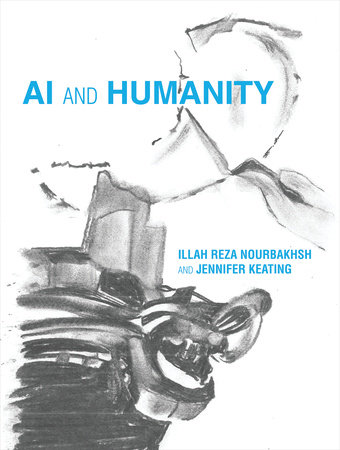
AI and Humanity provides an analytical framing and a common language for understanding the effects of technological advances in artificial intelligence on society. Coauthored by a computer scientist and a scholar of literature and cultural studies, it is unique in combining a humanities perspective with technical analysis, using the tools of literary explication to examine the societal impact of AI systems. It explores the historical development of these technologies, moving from the apparently benign Roomba to the considerably more sinister semi-autonomous weapon system Harpy.
The book is driven by an exploration of the cultural and etymological roots of a series of keywords relevant to both AI and society. Works examined range from Narrative of the Life of Frederick Douglass, given a close reading for its themes of literacy and agency, to Simon Head's critique of the effects of surveillance and automation on the Amazon labor force in Mindless.
Originally developed as a textbook for an interdisciplinary humanities-science course at Carnegie Mellon, AI & Humanity offers discussion questions, exercises (including journal writing and concept mapping), and reading lists. A companion website provides updated resources and a portal to a video archive of interviews with AI scientists, sociologists, literary theorists, and others.
AI and Humanity provides an analytical framing and a common language for understanding the effects of technological advances in artificial intelligence on society. Coauthored by a computer scientist and a scholar of literature and cultural studies, it is unique in combining a humanities perspective with technical analysis, using the tools of literary explication to examine the societal impact of AI systems. It explores the historical development of these technologies, moving from the apparently benign Roomba to the considerably more sinister semi-autonomous weapon system Harpy.
The book is driven by an exploration of the cultural and etymological roots of a series of keywords relevant to both AI and society. Works examined range from Narrative of the Life of Frederick Douglass, given a close reading for its themes of literacy and agency, to Simon Head's critique of the effects of surveillance and automation on the Amazon labor force in Mindless.
Originally developed as a textbook for an interdisciplinary humanities-science course at Carnegie Mellon, AI & Humanity offers discussion questions, exercises (including journal writing and concept mapping), and reading lists. A companion website provides updated resources and a portal to a video archive of interviews with AI scientists, sociologists, literary theorists, and others.
In celebration of Jewish American Heritage Month in May, we are sharing books by authors who share their individual stories, experiences, and lives. Find our full collection of books here.
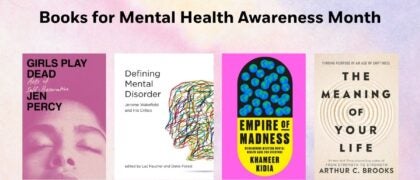
For Mental Health Awareness Month in May, we are sharing books to educate and raise awareness about mental health and the various factors that may affect it, and to provide tools and resources for student wellness. Find our full collection of titles here.
Each May, we honor the stories, histories, and cultures of Asian Americans, Native Hawaiians, and Pacific Islanders. Below is a selection of acclaimed fiction and nonfiction books by AANHPI creators to share with your students this month and throughout the year. Find our full collection of titles for Higher Education here.