
Books for Arab American Heritage Month
In honor of Arab American Heritage Month in April, we are sharing books by Arab and Arab American authors that share their culture, history, and personal lives.


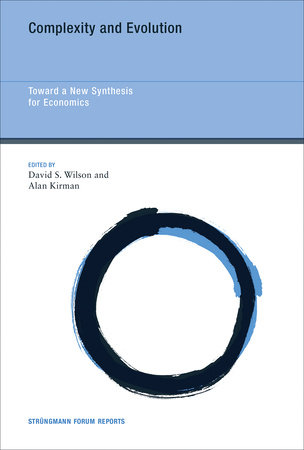
Two widely heralded yet contested approaches to economics have emerged in recent years: one emphasizes evolutionary theory in terms of individuals and institutions; the other views economies as complex adaptive systems. In this book, leading scholars examine these two bodies of theory, exploring their possible impact on economics. Relevant concepts from evolutionary theory drawn on by the contributors include the distinction between proximate and ultimate causation, multilevel selection, cultural change as an evolutionary process, and human psychology as a product of gene-culture coevolution. Applicable ideas from complexity theory include self-organization, fractals, chaos theory, sensitive dependence, basins of attraction, and path dependence.
The contributors discuss a synthesis of complexity and evolutionary approaches and the challenges that emerge. Focusing on evolutionary behavioral economics, and the evolution of institutions, they offer practical applications and point to avenues for future research.
Contributors
Robert Axtell, Jenna Bednar, Eric D. Beinhocker, Adrian V. Bell, Terence C. Burnham, Julia Chelen, David Colander, Iain D. Couzin, Thomas E. Currie, Joshua M. Epstein, Daniel Fricke, Herbert Gintis, Paul W. Glimcher, John Gowdy, Thorsten Hens, Michael E. Hochberg, Alan Kirman, Robert Kurzban, Leonhard Lades, Stephen E. G. Lea, John E. Mayfield, Mariana Mazzucato, Kevin McCabe, John F. Padgett, Scott E. Page, Karthik Panchanathan, Peter J. Richerson, Peter Schuster, Georg Schwesinger, Rajiv Sethi, Enrico Spolaore, Sven Steinmo, Miriam Teschl, Peter Turchin, Jeroen C. J. M. van den Bergh, Sander E. van der Leeuw, Romain Wacziarg, John J. Wallis, David S. Wilson, Ulrich Witt
Two widely heralded yet contested approaches to economics have emerged in recent years: one emphasizes evolutionary theory in terms of individuals and institutions; the other views economies as complex adaptive systems. In this book, leading scholars examine these two bodies of theory, exploring their possible impact on economics. Relevant concepts from evolutionary theory drawn on by the contributors include the distinction between proximate and ultimate causation, multilevel selection, cultural change as an evolutionary process, and human psychology as a product of gene-culture coevolution. Applicable ideas from complexity theory include self-organization, fractals, chaos theory, sensitive dependence, basins of attraction, and path dependence.
The contributors discuss a synthesis of complexity and evolutionary approaches and the challenges that emerge. Focusing on evolutionary behavioral economics, and the evolution of institutions, they offer practical applications and point to avenues for future research.
Contributors
Robert Axtell, Jenna Bednar, Eric D. Beinhocker, Adrian V. Bell, Terence C. Burnham, Julia Chelen, David Colander, Iain D. Couzin, Thomas E. Currie, Joshua M. Epstein, Daniel Fricke, Herbert Gintis, Paul W. Glimcher, John Gowdy, Thorsten Hens, Michael E. Hochberg, Alan Kirman, Robert Kurzban, Leonhard Lades, Stephen E. G. Lea, John E. Mayfield, Mariana Mazzucato, Kevin McCabe, John F. Padgett, Scott E. Page, Karthik Panchanathan, Peter J. Richerson, Peter Schuster, Georg Schwesinger, Rajiv Sethi, Enrico Spolaore, Sven Steinmo, Miriam Teschl, Peter Turchin, Jeroen C. J. M. van den Bergh, Sander E. van der Leeuw, Romain Wacziarg, John J. Wallis, David S. Wilson, Ulrich Witt





















In honor of Arab American Heritage Month in April, we are sharing books by Arab and Arab American authors that share their culture, history, and personal lives.
For National Poetry Month in April, we are sharing poetry collections and books about poetry by authors who have their own stories to tell. These poets delve into history, reimagine the present, examine poetry itself—from traditional poems many know and love to poems and voices that are new and original.