
Books for Arab American Heritage Month
In honor of Arab American Heritage Month in April, we are sharing books by Arab and Arab American authors that share their culture, history, and personal lives.


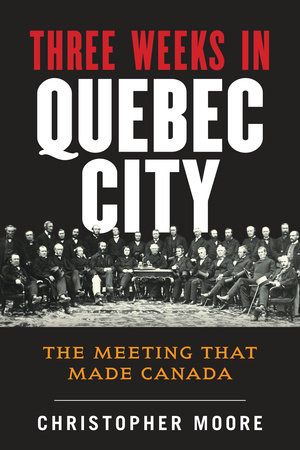
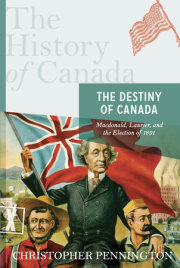
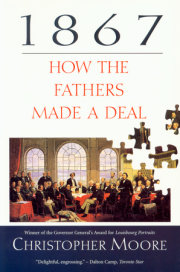
Federation, in principle, had been agreed on at the Charlottetown conference, but now it was time to debate the difficult issues of how a new nation would be formed. The delegates included John A. Macdonald, George Etienne-Cartier, and George Brown. Historian Christopher Moore demonstrates that Macdonald, the future prime minister, surprisingly was not the most significant player here, and Canada could have become a very different place.
The significance of this conference is played out in Canadian news each day. The main point of contention at the time was the issue of power—a strong federal body versus stronger provincial rights. Because of this conference, we have an elected House of Commons, an appointed Senate, a federal Parliament, and provincial legislatures. We have what amounts to a Canadian system of checks and balances. Did it work then, and does it work now?
ONE
October 10, 1864: La Vieille Capitale
“Since Saturday we have had the world’s bleakest weather,” lamented the Quebec City correspondent of the Montreal newspaper LaMinerve on Monday, October 10, 1864. “It is too bad for our visitors. Quebec City is so beautiful when the weather is good.” Instead, on Saturday night, “a white shroud of snow covered the ground, and a penetrating frost chilled us hand and foot. On Sunday, we might have been some- where in Siberia. Today the white shroud has grown dirty, and you cannot put a foot off the sidewalk without plunging into mud.” The wooden sidewalks were not much better than the streets. The English writer Anthony Trollope found while visiting that “the boards are rotten, and worn in some places to dirt. The nails have gone, and the broken planks go up and down under the feet, and in the dark they are absolutely dangerous.”1
1In 1864, “Canada” meant the territories of the St. Lawrence–Great Lakes system, roughly today’s Quebec and Ontario, then united into a single province of Canada. Citizens of the Atlantic provinces did not then think of themselves as Canadians.
The visitors for whom LaMinerve grieved were the delegates who had arrived for the British North American constitutional conference, beginning that morning at the legislative building. Thirty-three delegates from five provincial legislatures—Newfoundland, Nova Scotia, New Brunswick, Prince Edward Island, and Canada*—had come to Quebec City pursuing the old idea of uniting into a single nation all the prov- inces of British North America, an idea proposed frequently for fifty years without effect, and now suddenly revived. The threat to British North America from a massively armed and not always friendly United States encouraged the small and barely defended provinces to think of uniting for mutual protection. The rapid expansion of distance-annihi- lating railroads and steamships spurred visions of a continent-spanning new nation, bound by rail. A political crisis in the Province of Canada— present-day Ontario and Quebec—had stimulated the search for new and larger unions. And there was the sheer ambition of the thing. “Do we wish to live and die in our insignificance?” cried Joseph Howe of Nova Scotia when the idea of union was discussed in Halifax that summer, though he would come to oppose the plan these delegates would craft in Quebec City. His rival, Charles Tupper, foresaw Nova Scotians enjoying “a far higher status” as citizens of a transcontinental nation than as a small Atlantic coast community.2
In the Province of Canada, a broad coalition committed to remaking the union took power in June 1864. In September, eight cabinet members from that coalition travelled by steamship to Charlottetown to present their proposals to delegates of the legislatures of the three Maritime provinces. In the brilliant sun of Charlottetown, the Maritimers endorsed “confederation,” a federal union of all the British North American prov- inces. Confederation carried the promise of westward expansion to British Columbia on the Pacific coast, and of rail links between the Maritimes and “the Canadas.” During the six days at Charlottetown, this confederation had generated a shared purpose among the usually fractious politicians of British North America. But they had discussed the matter mostly at the level of general principle. The nuts and bolts of a formal union remained to be placed and tightened down. There would be confederation only “if the terms of union could be made satisfactory.”3
A longer meeting, a true constitutional conference, would be needed to discuss and ratify those terms of union, the principles and the practicalities upon which a new nation could be built. Early in October, British North American politicians were on the road again, this time to Quebec City.
In those days, they came usually by train. Quite suddenly, steam trains had become the way one travelled in British North America—but not yet between Atlantic Canada and Quebec City. No rail line yet linked all the provinces of British North America. Fortunately steamships, as new as, almost as fast as, and often more comfortable than steam trains, filled the gap. “The boats are very fine,” wrote one traveller on the steam- ships that plied between Montreal and Quebec City in 1864, noting that they were “three storeys high and like floating hotels,” although “they shake very much and the lamps swing with the motion, not agreeable.”4
For Maritimers travelling to the constitutional conference, a special steamship cruise had been arranged. In the 1850s, the province of Canada had commissioned a private shipping line to outfit three steam- ships to carry mail and tend the buoys and lighthouses of the Gulf of St. Lawrence. When the company got into financial trouble, the govern- ment found itself owning the ships. In August, the “government steamer” Queen Victoria had carried the Canadian cabinet from the dock at Quebec to anchorage in Charlottetown harbour in barely sixty hours. In early October, Queen Victoria sailed again, this time to bring Maritime delegates to Quebec City.5
Queen Victoria’s first call was Pictou on the gulf coast of Nova Scotia, where Nova Scotia’s delegates had come up from Halifax to meet the steamship. Premier Charles Tupper of Nova Scotia came aboard with three Conservative colleagues and two members of the Reform opposition, along with wives and daughters eager to renew the festivities many of them had enjoyed during the Charlottetown sessions. The next stop was Charlottetown, where Queen Victoria picked up Colonel John Gray, the Conservative premier of the island, and members of his cabinet, and also leaders of the Island’s Reformers—and more wives and daughters. Then the steamer made the short crossing to Shediac, New Brunswick, to collect another group of government and opposition members from the New Brunswick delegation, and more wives and daughters—again, no sons were included, and the daughters were all single and of marriageable age. Leaving Shediac early Friday morning, October 7, QueenVictoriamade steam for Quebec City, offering the passengers “every comfort and luxury that could be desired.”6
The mood was festive. Queen Victoria’s deck “was seldom deserted by promenaders during daylight and long after dark,” wrote Edward Whelan. Whelan, a member of the Prince Edward Island legislature and a delegate to the conference, was a Charlottetown newspaperman who kept copious notes for his paper, TheExaminer. As they steamed up the broad St. Lawrence, he reported, the promenaders on deck were driven indoors by gales and snow squalls. The storm slowed the ship’s progress, and the travellers reached Quebec City in darkness on Sunday, October 9, too late to share the sight sailors had marvelled at for centuries: the city and its mighty rock rising where the great river narrowed “like an island above the surface of the ocean,” as the Quebec navigator Joseph Bouchette once put it.7
Not all Maritime politicians heading for Quebec City were aboard Queen Victoria. Some had opted for the one railroad then available for travel from the Maritime provinces to Quebec City—the one through the United States. Prince Edward Island’s opposition leader and former premier, George Coles, his wife, and his daughter Mercy Anne boarded a steamer in Charlottetown at 3 a.m., and crossed to Shediac, New Brunswick. “I was very ill, it was so rough,” Mercy recalled in her diary, but a train waited at Shediac to carry them to Saint John, where they joined George Coles’s fellow Reformer, New Brunswick’s premier Leonard Tilley, and other delegates and their families. Tilley was “the only beau of the party,” with five single ladies, Mercy Anne reported, and she was flattered by his attentions. Tilley was forty-six to her twenty-six, but he was a widower and, though her language in the diary is guarded, she may have been considering him as a potential suitor. From Saint John, the steamer New Brunswicktook them down the Bay of Fundy to Portland, Maine, where they boarded the Grand Trunk passenger train north into Canada. They were expected: at the junction for Quebec, a special train requisitioned by the government of Canada waited to carry them along the branch line to Lévis Junction, across the river from Quebec City.8
In 1850, not even fifteen years earlier, the British North American provinces boasted barely a hundred kilometres of railroad. Travellers moved at the speed of stagecoaches and sailing ships. In winter, as the Canadian engineer Thomas Keefer wrote bitterly, “far away in the south is heard the daily scream of the steam whistle, but from Canada there is no escape, blockaded and imprisoned by ice.”9 In 1849, the reform- minded Canadian government of Louis-Hippolyte LaFontaine, newly empowered by something called “responsible government,” enacted legislation to provide financial underpinning for railroad bond issues. A railroad boom began, and soon the navvies were swinging their hammers. By 1864, the province of Canada alone boasted three thousand kilometres of railroad.
Canada’s principal railroad, the Grand Trunk, now ran from Sarnia in the west through Toronto and Montreal. At Montreal, the hub of this network, the mighty Victoria Bridge, an engineering marvel completed in
1860, carried the rail line across the St. Lawrence, and the Grand Trunk continued downriver past Quebec as far as tidewater at Rivière du Loup. From Montreal, another line ran southeast to Portland, Maine. Maritimers still made do with relatively short local lines, but they too were planning new railroad projects everywhere, and they nursed bold aspirations for lines to Quebec City and Montreal and down into the United States.
Not that train travel was luxurious. “One might just as well try to write on horseback,” Mercy Coles wrote about diary-keeping on a train. The first Grand Trunk trains took fourteen hours to travel from Toronto to Montreal, and at first they had no dining or sleeping cars. Soon after confederation, a new member of Parliament from southwestern Ontario boarded a train at Strathroy on his way to his first parliamentary session. He had to change trains at London, Hamilton, Toronto, and Prescott, with long waits each time, and he arrived in Ottawa exhausted after twenty-four bumpy hours. Grumpy too: at some point his new umbrella had been stolen from the overhead rack.10
Train travel carried risks greater than delays and petty theft. In June 1864, a Grand Trunk passenger train rattling through Beloeil in Quebec’s Richelieu Valley crashed through an open drawbridge, and ninety-nine people died in the wreck. “The Grand Trunk is in very bad repair,” the politician George Brown grumbled a few months earlier. “Almost every day we hear of accidents.”11 Despite the dangers and discomforts, the railroads enabled resourceful travellers to make jour- neys in speed and relative comfort, like the one bringing these Maritimers toward Quebec City. The American writer Henry James, who would visit Quebec City a few years later, described his trip north from the United States by train as “a dreary night journey through crude, monotonous woods,” until the railroad line emerged onto the south shore of the St. Lawrence. Then suddenly “beyond it, over against you, on its rocky promontory, sits the ancient town, belted with its hoary wall and crowned with its granite citadel.”12
Mercy Coles and the Maritime politicians taking the train to Quebec travelled in daylight, but they reached Lévis station too late on Saturday afternoon, October 8, to appreciate Henry James’s view of the citadel city. It was dark when they took the ferry across the river in heavy rain and rode carriages up to the Upper Town. After some confusion about their destination, they found their way to the Hotel St-Louis inside the city walls on Rue St-Louis, “a very nice hotel and every comfort one can wish for,” in Mercy’s opinion. Two delegates from Newfoundland had already arrived, but the storm-stayed passengers from Queen Victoria would not join them until the following evening. Journalists from as far as London and New York, executives from all the leading railroad companies, and other interested parties who had swarmed to Quebec for the conference had been dispatched to the Russell House some blocks away.
The Hotel St-Louis, Quebec City’s leading hotel from the 1850s until the Chateau Frontenac was built just down the street in the 1890s, would be a hive of activity throughout the conference, and not only for the Maritimers. Several of the Canadian delegates, indeed, were also residents of the hotel. Six months earlier, George Brown had been rent- ing “very good quarters—a good sitting room and a closet as bedroom” in Madame Langlois’s house on the north side of the upper town, “with a glorious view of the St. Charles” river. But Madame Langlois sold the house in May, and Brown joined other parliamentarians who roomed at the Hotel St-Louis.13 On Saturday night, Mercy Coles encountered him in the hotel drawing room as soon as she had changed her dress and ventured downstairs. She had met Brown and most of the other Canadian politicians in September, during their mission to Charlottetown; at the time Brown had written to his wife that the Coles daughters were “educated, well informed and as sharp as needles.”14 Brown himself had only returned from Toronto that morning, sped down overnight in a private rail car—being a cabinet minister had perks, he noted apprecia- tively—and they all reunited like old friends. “Mr. Cartier, John A. Macdonald, and McGee arrived in a minute,” Mercy reported, and with instinctive Victorian formality, they arranged themselves to go into the dining room. “Mr. Cartier took Ma to dinner, John A. took Mrs. Pope; we had a splendid dinner.” Friendships forged at Charlottetown were renewed, and Macdonald’s aide, Hewitt Bernard, promised Mercy they would all have “grand times.” There would be an even larger gathering at the hotel the following evening when Queen Victoria’s passengers arrived “What a Babel when they came in!&rduo; she told her diary.15
As a governor general’s wife was soon to say, Quebec City was already “one of the most famous landscapes of the world,” and the confedera- tion delegates and their families were eager to explore what Edward Whelan called “the ancient and historic city” and its “mazy, crooked, narrow and bewildering streets.”16 In 1864, Quebec was a city also being transformed by steam and iron. Since Champlain’s day, and long before, Quebec had commanded the narrows of the St. Lawrence from its rock above the river, controlling all traffic and trade between the wide Atlantic world and the interior of Canada. The city’s guns had long defended the entry to the continent, and its docks and warehouses dominated its trade. Upstream from Quebec City, only local shipping traffic ventured. In the 1850s, however, shipping began to travel past the city. Powerful steamship engines and the dredging of the riverbed allowed ships swift passage upriver, right past the older city to Montreal, the emerging commercial capital and railroad hub. In the new age of steam and iron, Quebec City’s businesses were shifting to Montreal, particularly the international commerce that depended on British capital and operated mostly in English.
Montreal, the new point of exchange between the steamships and the American continent, grew rapidly in the 1860s, but Quebec City’s population levelled off at about fifty thousand people. That population was about 40 percent English in the 1860s, but would grow steadily more French-speaking. Was Quebec City about to become what Montrealers were already beginning to call it: the vieillecapitale, a folkloric, historic place that business had passed by? Slower growth would indeed preserve its historic ambiance, its walls and ancient buildings, but in 1864 the city was still the centre of government for the province of Canada and the residence of the governor general of all British North America. Quebec was still the military capital of British North America, with a garrison of red-coated British soldiers and their officers, and fortifications of stone and earth framing the town. It remained a centre of commerce, law, and culture. Many of the great institutions of French Canada—the Catholic bishop’s cathedral and palace, the Séminaire de Québec, Université Laval—were found inside the ancient walls in the Upper Town neighbourhoods atop the cliffs, mingled inextricably with long-established English institutions, such as the Anglican Cathedral, the English-language college, and the homes of leading anglophone business families. The civic government was simi- larly mixed. Adolphe Tourangeau, a lawyer and businessman, had recently succeeded Thomas Pope as mayor of the city, though his plan to demolish the town’s gates and even the walls themselves as part of his modernization campaign had been thwarted. The city remained divided between the stylish Upper Town inside the walls and the working-class Lower Town along the riverfront, but in recent years the Grand Allée had been laid out, leading westward beyond the St. Louis Gate, through new developments and past the Plains of Abraham to Spencer Wood, the elegant park and residence of the governor general.17
Quebec City had not yet yielded cultural leadership to Montreal, either in English or French. Since 1824, the Literary and Historical Society of Quebec, mostly but not exclusively English, had been maintaining a library and collecting historical records. And at Octave Crémazie’s bookshop, many of French Quebec’s leading intellectuals and writers could often be found in the backroom gathering place. Crémazie himself, honoured as “le poète nationale” for his tributes to French Canada’s culture, no longer joined them; he had fled to Paris to escape his extravagant debts. His shop remained a gathering place for poets, journalists, antiquarians, and artists such as the painter Théophile Hamel. Quebec was also home to Cornelius Krieghoff, whose paintings of habitant life were already popular among English-Canadian collec- tors. Both of French Canada’s leading historians lived in the city. François-Xavier Garneau, ailing and elderly in 1864, had been inspired to write his Histoire du Canada by Lord Durham’s ill-considered remark that the French Canadians were a people without history, but Garneau was a free thinker and somewhat anti-clerical, so the church hierarchy preferred the more deferential Cours d’Histoire of Abbé Ferland, dean of arts at Université Laval. More popular than either, both in French and in English translation, was the nostalgic historical novel LesAnciens Canadians, recently published by the elderly lawyer and former seigneur Philippe Aubert de Gaspé.
If trains and steamships were draining trade from Quebec City, they could at least bring visitors. Anthony Trollope visited in 1861, observing, “The best part of the town is built high upon the rock—the rock which forms the celebrated plains of Abram; and the view from thence down to the mountains which shut in the St. Lawrence is magnif- icent.” The homespun American humourist Artemus Ward came in 1865, and wrote home, “The streets don’t lead anywheres in particular but everywhere in general. The city is built on a variety of perpendicu- lar hills, each hill bein’ a little wuss than t’other one.”18 Ten years earlier, the English world traveller Isabella Bird found Quebec “most picturesque … all novel and original,” and was struck by its military air. “Guards and sentries appear in all directions; nightfall brings with it the challenge ‘Who goesthere?’ and narrow gateways form inconvenient entrances to streets so steep that I wondered how mortal horses could ever toil up them.”19
Now came all these politicians from all the provinces of British North America, paying court to the traditional pre-eminence of the city by bringing the crucial constitutional negotiations to be settled there. Journalists and political aides and railroad lobbyists followed them. While the delegates got the newly built Hotel St-Louis, these observers were dispatched to the older Russell House, across town on Côte du Palais. A decade earlier, Isabella Bird had found the guests at the Russell “lively and amusing,” although the hotel was “composed of three of the oldest houses in Quebec,” had “no end of long passages, dark winding staircases, and queer little rooms,” and was “haunted to a fearful extent by rats.”20 Around the constitutional summit would develop a social and commercial festival to brighten a cold, damp autumn. The governor general and his court, the politicians and civil servants, and the civic elite, both French and English, would all be drawn in, inspiring Edward Whelan to tell his Charlottetown readers that the Maritimers were in danger of forgetting their mother tongue and returning home “talking a strange conglomeration of English and excessively bad French.”21
Shopkeepers, hoteliers, and caleche drivers would prosper. Whatever those upriver parvenus in Montreal might think, Quebec in these few weeks seemed to recover its place as the key city of British North America. It warmed the hearts of Quebec City to see the steamships arriving crowded with Montrealers whenever one of the great balls of the confederation conference was about to be held.22
There had been a long gestation to this constitutional conference. It had emerged from fierce rivalries among the provinces and within their governments, and from equally fierce clashes of both ideology and ambi- tion among the politicians involved. The meeting at Quebec had drawn together several provinces, more than thirty delegates, and many contending interests. At the heart of the project, however, stood three men, all from the province of Canada, all between the ages of forty-five and fifty, all veteran politicians, and all vying for leadership in the confer- ence and in the new nation they would discuss. They were a francophone from Montreal, George-Étienne Cartier; a Scots Canadian from Toronto, George Brown; and a second Scot, John A. Macdonald, from Kingston. Their tactical alliances, their three-cornered rivalry, and their visions for confederation would be central to the whole process.
Federation, in principle, had been agreed on at the Charlottetown conference, but now it was time to debate the difficult issues of how a new nation would be formed. The delegates included John A. Macdonald, George Etienne-Cartier, and George Brown. Historian Christopher Moore demonstrates that Macdonald, the future prime minister, surprisingly was not the most significant player here, and Canada could have become a very different place.
The significance of this conference is played out in Canadian news each day. The main point of contention at the time was the issue of power—a strong federal body versus stronger provincial rights. Because of this conference, we have an elected House of Commons, an appointed Senate, a federal Parliament, and provincial legislatures. We have what amounts to a Canadian system of checks and balances. Did it work then, and does it work now?
ONE
October 10, 1864: La Vieille Capitale
“Since Saturday we have had the world’s bleakest weather,” lamented the Quebec City correspondent of the Montreal newspaper LaMinerve on Monday, October 10, 1864. “It is too bad for our visitors. Quebec City is so beautiful when the weather is good.” Instead, on Saturday night, “a white shroud of snow covered the ground, and a penetrating frost chilled us hand and foot. On Sunday, we might have been some- where in Siberia. Today the white shroud has grown dirty, and you cannot put a foot off the sidewalk without plunging into mud.” The wooden sidewalks were not much better than the streets. The English writer Anthony Trollope found while visiting that “the boards are rotten, and worn in some places to dirt. The nails have gone, and the broken planks go up and down under the feet, and in the dark they are absolutely dangerous.”1
1In 1864, “Canada” meant the territories of the St. Lawrence–Great Lakes system, roughly today’s Quebec and Ontario, then united into a single province of Canada. Citizens of the Atlantic provinces did not then think of themselves as Canadians.
The visitors for whom LaMinerve grieved were the delegates who had arrived for the British North American constitutional conference, beginning that morning at the legislative building. Thirty-three delegates from five provincial legislatures—Newfoundland, Nova Scotia, New Brunswick, Prince Edward Island, and Canada*—had come to Quebec City pursuing the old idea of uniting into a single nation all the prov- inces of British North America, an idea proposed frequently for fifty years without effect, and now suddenly revived. The threat to British North America from a massively armed and not always friendly United States encouraged the small and barely defended provinces to think of uniting for mutual protection. The rapid expansion of distance-annihi- lating railroads and steamships spurred visions of a continent-spanning new nation, bound by rail. A political crisis in the Province of Canada— present-day Ontario and Quebec—had stimulated the search for new and larger unions. And there was the sheer ambition of the thing. “Do we wish to live and die in our insignificance?” cried Joseph Howe of Nova Scotia when the idea of union was discussed in Halifax that summer, though he would come to oppose the plan these delegates would craft in Quebec City. His rival, Charles Tupper, foresaw Nova Scotians enjoying “a far higher status” as citizens of a transcontinental nation than as a small Atlantic coast community.2
In the Province of Canada, a broad coalition committed to remaking the union took power in June 1864. In September, eight cabinet members from that coalition travelled by steamship to Charlottetown to present their proposals to delegates of the legislatures of the three Maritime provinces. In the brilliant sun of Charlottetown, the Maritimers endorsed “confederation,” a federal union of all the British North American prov- inces. Confederation carried the promise of westward expansion to British Columbia on the Pacific coast, and of rail links between the Maritimes and “the Canadas.” During the six days at Charlottetown, this confederation had generated a shared purpose among the usually fractious politicians of British North America. But they had discussed the matter mostly at the level of general principle. The nuts and bolts of a formal union remained to be placed and tightened down. There would be confederation only “if the terms of union could be made satisfactory.”3
A longer meeting, a true constitutional conference, would be needed to discuss and ratify those terms of union, the principles and the practicalities upon which a new nation could be built. Early in October, British North American politicians were on the road again, this time to Quebec City.
In those days, they came usually by train. Quite suddenly, steam trains had become the way one travelled in British North America—but not yet between Atlantic Canada and Quebec City. No rail line yet linked all the provinces of British North America. Fortunately steamships, as new as, almost as fast as, and often more comfortable than steam trains, filled the gap. “The boats are very fine,” wrote one traveller on the steam- ships that plied between Montreal and Quebec City in 1864, noting that they were “three storeys high and like floating hotels,” although “they shake very much and the lamps swing with the motion, not agreeable.”4
For Maritimers travelling to the constitutional conference, a special steamship cruise had been arranged. In the 1850s, the province of Canada had commissioned a private shipping line to outfit three steam- ships to carry mail and tend the buoys and lighthouses of the Gulf of St. Lawrence. When the company got into financial trouble, the govern- ment found itself owning the ships. In August, the “government steamer” Queen Victoria had carried the Canadian cabinet from the dock at Quebec to anchorage in Charlottetown harbour in barely sixty hours. In early October, Queen Victoria sailed again, this time to bring Maritime delegates to Quebec City.5
Queen Victoria’s first call was Pictou on the gulf coast of Nova Scotia, where Nova Scotia’s delegates had come up from Halifax to meet the steamship. Premier Charles Tupper of Nova Scotia came aboard with three Conservative colleagues and two members of the Reform opposition, along with wives and daughters eager to renew the festivities many of them had enjoyed during the Charlottetown sessions. The next stop was Charlottetown, where Queen Victoria picked up Colonel John Gray, the Conservative premier of the island, and members of his cabinet, and also leaders of the Island’s Reformers—and more wives and daughters. Then the steamer made the short crossing to Shediac, New Brunswick, to collect another group of government and opposition members from the New Brunswick delegation, and more wives and daughters—again, no sons were included, and the daughters were all single and of marriageable age. Leaving Shediac early Friday morning, October 7, QueenVictoriamade steam for Quebec City, offering the passengers “every comfort and luxury that could be desired.”6
The mood was festive. Queen Victoria’s deck “was seldom deserted by promenaders during daylight and long after dark,” wrote Edward Whelan. Whelan, a member of the Prince Edward Island legislature and a delegate to the conference, was a Charlottetown newspaperman who kept copious notes for his paper, TheExaminer. As they steamed up the broad St. Lawrence, he reported, the promenaders on deck were driven indoors by gales and snow squalls. The storm slowed the ship’s progress, and the travellers reached Quebec City in darkness on Sunday, October 9, too late to share the sight sailors had marvelled at for centuries: the city and its mighty rock rising where the great river narrowed “like an island above the surface of the ocean,” as the Quebec navigator Joseph Bouchette once put it.7
Not all Maritime politicians heading for Quebec City were aboard Queen Victoria. Some had opted for the one railroad then available for travel from the Maritime provinces to Quebec City—the one through the United States. Prince Edward Island’s opposition leader and former premier, George Coles, his wife, and his daughter Mercy Anne boarded a steamer in Charlottetown at 3 a.m., and crossed to Shediac, New Brunswick. “I was very ill, it was so rough,” Mercy recalled in her diary, but a train waited at Shediac to carry them to Saint John, where they joined George Coles’s fellow Reformer, New Brunswick’s premier Leonard Tilley, and other delegates and their families. Tilley was “the only beau of the party,” with five single ladies, Mercy Anne reported, and she was flattered by his attentions. Tilley was forty-six to her twenty-six, but he was a widower and, though her language in the diary is guarded, she may have been considering him as a potential suitor. From Saint John, the steamer New Brunswicktook them down the Bay of Fundy to Portland, Maine, where they boarded the Grand Trunk passenger train north into Canada. They were expected: at the junction for Quebec, a special train requisitioned by the government of Canada waited to carry them along the branch line to Lévis Junction, across the river from Quebec City.8
In 1850, not even fifteen years earlier, the British North American provinces boasted barely a hundred kilometres of railroad. Travellers moved at the speed of stagecoaches and sailing ships. In winter, as the Canadian engineer Thomas Keefer wrote bitterly, “far away in the south is heard the daily scream of the steam whistle, but from Canada there is no escape, blockaded and imprisoned by ice.”9 In 1849, the reform- minded Canadian government of Louis-Hippolyte LaFontaine, newly empowered by something called “responsible government,” enacted legislation to provide financial underpinning for railroad bond issues. A railroad boom began, and soon the navvies were swinging their hammers. By 1864, the province of Canada alone boasted three thousand kilometres of railroad.
Canada’s principal railroad, the Grand Trunk, now ran from Sarnia in the west through Toronto and Montreal. At Montreal, the hub of this network, the mighty Victoria Bridge, an engineering marvel completed in
1860, carried the rail line across the St. Lawrence, and the Grand Trunk continued downriver past Quebec as far as tidewater at Rivière du Loup. From Montreal, another line ran southeast to Portland, Maine. Maritimers still made do with relatively short local lines, but they too were planning new railroad projects everywhere, and they nursed bold aspirations for lines to Quebec City and Montreal and down into the United States.
Not that train travel was luxurious. “One might just as well try to write on horseback,” Mercy Coles wrote about diary-keeping on a train. The first Grand Trunk trains took fourteen hours to travel from Toronto to Montreal, and at first they had no dining or sleeping cars. Soon after confederation, a new member of Parliament from southwestern Ontario boarded a train at Strathroy on his way to his first parliamentary session. He had to change trains at London, Hamilton, Toronto, and Prescott, with long waits each time, and he arrived in Ottawa exhausted after twenty-four bumpy hours. Grumpy too: at some point his new umbrella had been stolen from the overhead rack.10
Train travel carried risks greater than delays and petty theft. In June 1864, a Grand Trunk passenger train rattling through Beloeil in Quebec’s Richelieu Valley crashed through an open drawbridge, and ninety-nine people died in the wreck. “The Grand Trunk is in very bad repair,” the politician George Brown grumbled a few months earlier. “Almost every day we hear of accidents.”11 Despite the dangers and discomforts, the railroads enabled resourceful travellers to make jour- neys in speed and relative comfort, like the one bringing these Maritimers toward Quebec City. The American writer Henry James, who would visit Quebec City a few years later, described his trip north from the United States by train as “a dreary night journey through crude, monotonous woods,” until the railroad line emerged onto the south shore of the St. Lawrence. Then suddenly “beyond it, over against you, on its rocky promontory, sits the ancient town, belted with its hoary wall and crowned with its granite citadel.”12
Mercy Coles and the Maritime politicians taking the train to Quebec travelled in daylight, but they reached Lévis station too late on Saturday afternoon, October 8, to appreciate Henry James’s view of the citadel city. It was dark when they took the ferry across the river in heavy rain and rode carriages up to the Upper Town. After some confusion about their destination, they found their way to the Hotel St-Louis inside the city walls on Rue St-Louis, “a very nice hotel and every comfort one can wish for,” in Mercy’s opinion. Two delegates from Newfoundland had already arrived, but the storm-stayed passengers from Queen Victoria would not join them until the following evening. Journalists from as far as London and New York, executives from all the leading railroad companies, and other interested parties who had swarmed to Quebec for the conference had been dispatched to the Russell House some blocks away.
The Hotel St-Louis, Quebec City’s leading hotel from the 1850s until the Chateau Frontenac was built just down the street in the 1890s, would be a hive of activity throughout the conference, and not only for the Maritimers. Several of the Canadian delegates, indeed, were also residents of the hotel. Six months earlier, George Brown had been rent- ing “very good quarters—a good sitting room and a closet as bedroom” in Madame Langlois’s house on the north side of the upper town, “with a glorious view of the St. Charles” river. But Madame Langlois sold the house in May, and Brown joined other parliamentarians who roomed at the Hotel St-Louis.13 On Saturday night, Mercy Coles encountered him in the hotel drawing room as soon as she had changed her dress and ventured downstairs. She had met Brown and most of the other Canadian politicians in September, during their mission to Charlottetown; at the time Brown had written to his wife that the Coles daughters were “educated, well informed and as sharp as needles.”14 Brown himself had only returned from Toronto that morning, sped down overnight in a private rail car—being a cabinet minister had perks, he noted apprecia- tively—and they all reunited like old friends. “Mr. Cartier, John A. Macdonald, and McGee arrived in a minute,” Mercy reported, and with instinctive Victorian formality, they arranged themselves to go into the dining room. “Mr. Cartier took Ma to dinner, John A. took Mrs. Pope; we had a splendid dinner.” Friendships forged at Charlottetown were renewed, and Macdonald’s aide, Hewitt Bernard, promised Mercy they would all have “grand times.” There would be an even larger gathering at the hotel the following evening when Queen Victoria’s passengers arrived “What a Babel when they came in!&rduo; she told her diary.15
As a governor general’s wife was soon to say, Quebec City was already “one of the most famous landscapes of the world,” and the confedera- tion delegates and their families were eager to explore what Edward Whelan called “the ancient and historic city” and its “mazy, crooked, narrow and bewildering streets.”16 In 1864, Quebec was a city also being transformed by steam and iron. Since Champlain’s day, and long before, Quebec had commanded the narrows of the St. Lawrence from its rock above the river, controlling all traffic and trade between the wide Atlantic world and the interior of Canada. The city’s guns had long defended the entry to the continent, and its docks and warehouses dominated its trade. Upstream from Quebec City, only local shipping traffic ventured. In the 1850s, however, shipping began to travel past the city. Powerful steamship engines and the dredging of the riverbed allowed ships swift passage upriver, right past the older city to Montreal, the emerging commercial capital and railroad hub. In the new age of steam and iron, Quebec City’s businesses were shifting to Montreal, particularly the international commerce that depended on British capital and operated mostly in English.
Montreal, the new point of exchange between the steamships and the American continent, grew rapidly in the 1860s, but Quebec City’s population levelled off at about fifty thousand people. That population was about 40 percent English in the 1860s, but would grow steadily more French-speaking. Was Quebec City about to become what Montrealers were already beginning to call it: the vieillecapitale, a folkloric, historic place that business had passed by? Slower growth would indeed preserve its historic ambiance, its walls and ancient buildings, but in 1864 the city was still the centre of government for the province of Canada and the residence of the governor general of all British North America. Quebec was still the military capital of British North America, with a garrison of red-coated British soldiers and their officers, and fortifications of stone and earth framing the town. It remained a centre of commerce, law, and culture. Many of the great institutions of French Canada—the Catholic bishop’s cathedral and palace, the Séminaire de Québec, Université Laval—were found inside the ancient walls in the Upper Town neighbourhoods atop the cliffs, mingled inextricably with long-established English institutions, such as the Anglican Cathedral, the English-language college, and the homes of leading anglophone business families. The civic government was simi- larly mixed. Adolphe Tourangeau, a lawyer and businessman, had recently succeeded Thomas Pope as mayor of the city, though his plan to demolish the town’s gates and even the walls themselves as part of his modernization campaign had been thwarted. The city remained divided between the stylish Upper Town inside the walls and the working-class Lower Town along the riverfront, but in recent years the Grand Allée had been laid out, leading westward beyond the St. Louis Gate, through new developments and past the Plains of Abraham to Spencer Wood, the elegant park and residence of the governor general.17
Quebec City had not yet yielded cultural leadership to Montreal, either in English or French. Since 1824, the Literary and Historical Society of Quebec, mostly but not exclusively English, had been maintaining a library and collecting historical records. And at Octave Crémazie’s bookshop, many of French Quebec’s leading intellectuals and writers could often be found in the backroom gathering place. Crémazie himself, honoured as “le poète nationale” for his tributes to French Canada’s culture, no longer joined them; he had fled to Paris to escape his extravagant debts. His shop remained a gathering place for poets, journalists, antiquarians, and artists such as the painter Théophile Hamel. Quebec was also home to Cornelius Krieghoff, whose paintings of habitant life were already popular among English-Canadian collec- tors. Both of French Canada’s leading historians lived in the city. François-Xavier Garneau, ailing and elderly in 1864, had been inspired to write his Histoire du Canada by Lord Durham’s ill-considered remark that the French Canadians were a people without history, but Garneau was a free thinker and somewhat anti-clerical, so the church hierarchy preferred the more deferential Cours d’Histoire of Abbé Ferland, dean of arts at Université Laval. More popular than either, both in French and in English translation, was the nostalgic historical novel LesAnciens Canadians, recently published by the elderly lawyer and former seigneur Philippe Aubert de Gaspé.
If trains and steamships were draining trade from Quebec City, they could at least bring visitors. Anthony Trollope visited in 1861, observing, “The best part of the town is built high upon the rock—the rock which forms the celebrated plains of Abram; and the view from thence down to the mountains which shut in the St. Lawrence is magnif- icent.” The homespun American humourist Artemus Ward came in 1865, and wrote home, “The streets don’t lead anywheres in particular but everywhere in general. The city is built on a variety of perpendicu- lar hills, each hill bein’ a little wuss than t’other one.”18 Ten years earlier, the English world traveller Isabella Bird found Quebec “most picturesque … all novel and original,” and was struck by its military air. “Guards and sentries appear in all directions; nightfall brings with it the challenge ‘Who goesthere?’ and narrow gateways form inconvenient entrances to streets so steep that I wondered how mortal horses could ever toil up them.”19
Now came all these politicians from all the provinces of British North America, paying court to the traditional pre-eminence of the city by bringing the crucial constitutional negotiations to be settled there. Journalists and political aides and railroad lobbyists followed them. While the delegates got the newly built Hotel St-Louis, these observers were dispatched to the older Russell House, across town on Côte du Palais. A decade earlier, Isabella Bird had found the guests at the Russell “lively and amusing,” although the hotel was “composed of three of the oldest houses in Quebec,” had “no end of long passages, dark winding staircases, and queer little rooms,” and was “haunted to a fearful extent by rats.”20 Around the constitutional summit would develop a social and commercial festival to brighten a cold, damp autumn. The governor general and his court, the politicians and civil servants, and the civic elite, both French and English, would all be drawn in, inspiring Edward Whelan to tell his Charlottetown readers that the Maritimers were in danger of forgetting their mother tongue and returning home “talking a strange conglomeration of English and excessively bad French.”21
Shopkeepers, hoteliers, and caleche drivers would prosper. Whatever those upriver parvenus in Montreal might think, Quebec in these few weeks seemed to recover its place as the key city of British North America. It warmed the hearts of Quebec City to see the steamships arriving crowded with Montrealers whenever one of the great balls of the confederation conference was about to be held.22
There had been a long gestation to this constitutional conference. It had emerged from fierce rivalries among the provinces and within their governments, and from equally fierce clashes of both ideology and ambi- tion among the politicians involved. The meeting at Quebec had drawn together several provinces, more than thirty delegates, and many contending interests. At the heart of the project, however, stood three men, all from the province of Canada, all between the ages of forty-five and fifty, all veteran politicians, and all vying for leadership in the confer- ence and in the new nation they would discuss. They were a francophone from Montreal, George-Étienne Cartier; a Scots Canadian from Toronto, George Brown; and a second Scot, John A. Macdonald, from Kingston. Their tactical alliances, their three-cornered rivalry, and their visions for confederation would be central to the whole process.

In honor of Arab American Heritage Month in April, we are sharing books by Arab and Arab American authors that share their culture, history, and personal lives.
For National Poetry Month in April, we are sharing poetry collections and books about poetry by authors who have their own stories to tell. These poets delve into history, reimagine the present, examine poetry itself—from traditional poems many know and love to poems and voices that are new and original.