
Books for Jewish American Heritage Month
In celebration of Jewish American Heritage Month in May, we are sharing books by authors who share their individual stories, experiences, and lives. Find our full collection of books here.


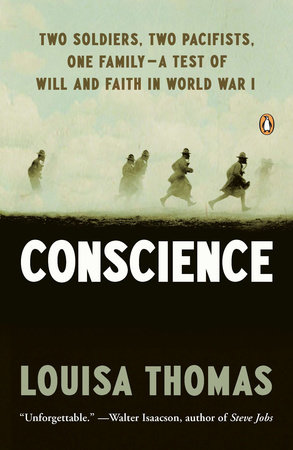
When the United States entered the Great War, Ralph Thomas enlisted right away, heeding President Woodrow Wilson’s call to fight for freedom. A captain in the Army Corps of Engineers, he would be wounded in France. Arthur, the youngest, was less certain about the righteousness of the cause but was sensitive to his obligation as a citizen—and like so many men eager to have a chance to prove himself. Evan became a conscientious objector, protesting conscription; when the truce was signed on November 11, 1918, he was in solitary confinement. Norman Thomas was a Presbyterian minister when the war began. Before the United States entered the war, he became a pacifist, and by the time it was over, he was a Socialist. He would go on to run for President six times on the Socialist ticket. The Thomas brothers argued about what was possible and what was principled, what was right and what was wrong—and they told each other to have courage. .
Conscience moves from the gothic buildings of Princeton to the tenements of New York City, from the West Wing of the White House to the battlefields of France, tracking four young men navigating upheaval. In telling the story of their journeys, Thomas recovers a way of talking about personal liberty and social obligation, about being true to oneself and to one another.
When the United States entered the Great War, Ralph Thomas enlisted right away, heeding President Woodrow Wilson’s call to fight for freedom. A captain in the Army Corps of Engineers, he would be wounded in France. Arthur, the youngest, was less certain about the righteousness of the cause but was sensitive to his obligation as a citizen—and like so many men eager to have a chance to prove himself. Evan became a conscientious objector, protesting conscription; when the truce was signed on November 11, 1918, he was in solitary confinement. Norman Thomas was a Presbyterian minister when the war began. Before the United States entered the war, he became a pacifist, and by the time it was over, he was a Socialist. He would go on to run for President six times on the Socialist ticket. The Thomas brothers argued about what was possible and what was principled, what was right and what was wrong—and they told each other to have courage. .
Conscience moves from the gothic buildings of Princeton to the tenements of New York City, from the West Wing of the White House to the battlefields of France, tracking four young men navigating upheaval. In telling the story of their journeys, Thomas recovers a way of talking about personal liberty and social obligation, about being true to oneself and to one another.
In celebration of Jewish American Heritage Month in May, we are sharing books by authors who share their individual stories, experiences, and lives. Find our full collection of books here.
For Mental Health Awareness Month in May, we are sharing books to educate and raise awareness about mental health and the various factors that may affect it, and to provide tools and resources for student wellness. Find our full collection of titles here.
Each May, we honor the stories, histories, and cultures of Asian Americans, Native Hawaiians, and Pacific Islanders. Below is a selection of acclaimed fiction and nonfiction books by AANHPI creators to share with your students this month and throughout the year. Find our full collection of titles for Higher Education here.