
Books for Arab American Heritage Month
In honor of Arab American Heritage Month in April, we are sharing books by Arab and Arab American authors that share their culture, history, and personal lives.


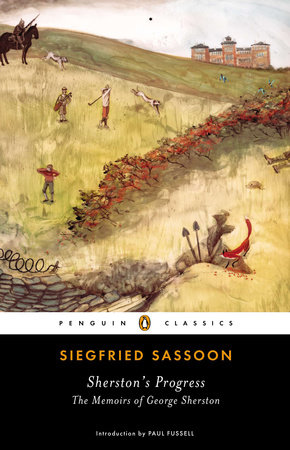
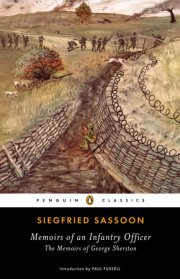
A highly decorated English soldier and an acclaimed poet and novelist, Siegfried Sassoon won fame for his trilogy of fictionalized autobiographies that wonderfully capture the vanishing idylls of Edwardian England and the brutal realities of war.
Having been deemed mentally ill for his anti-war sentiments and sent for treatment, George Sherston comes under the care of neurologist Dr. W. H. R. Rivers, who allows Sherston to sort through his attitudes toward the fighting (events that have also been semi-fictionalized by Pat Barker for her bestselling and critically acclaimed Regeneration Trilogy). After six months in the hospital, Sherston leaves to rejoin his regiment. He is soon dispatched to Ireland, where he attempts to reclaim some of the idyllic fox-hunting days of his youth, then to Palestine. He finally ends up at the Western Front in France, where he is shot in the head while on a reconnaissance mission and invalided back home. As the capstone of Sassoon's masterful Sherston trilogy, Sherston's Progress—whose evocation of Bunyan's Pilgrim's Progress is not at all accidental—literally brings home the unforgettable journey of George Sherston from aristocratic childhood through war hero and anti-war martyr, all the way to wounded veteran trying to move on from the Great War.
For more than seventy years, Penguin has been the leading publisher of classic literature in the English-speaking world. With more than 1,700 titles, Penguin Classics represents a global bookshelf of the best works throughout history and across genres and disciplines. Readers trust the series to provide authoritative texts enhanced by introductions and notes by distinguished scholars and contemporary authors, as well as up-to-date translations by award-winning translators.
A highly decorated English soldier and an acclaimed poet and novelist, Siegfried Sassoon won fame for his trilogy of fictionalized autobiographies that wonderfully capture the vanishing idylls of Edwardian England and the brutal realities of war.
Having been deemed mentally ill for his anti-war sentiments and sent for treatment, George Sherston comes under the care of neurologist Dr. W. H. R. Rivers, who allows Sherston to sort through his attitudes toward the fighting (events that have also been semi-fictionalized by Pat Barker for her bestselling and critically acclaimed Regeneration Trilogy). After six months in the hospital, Sherston leaves to rejoin his regiment. He is soon dispatched to Ireland, where he attempts to reclaim some of the idyllic fox-hunting days of his youth, then to Palestine. He finally ends up at the Western Front in France, where he is shot in the head while on a reconnaissance mission and invalided back home. As the capstone of Sassoon's masterful Sherston trilogy, Sherston's Progress—whose evocation of Bunyan's Pilgrim's Progress is not at all accidental—literally brings home the unforgettable journey of George Sherston from aristocratic childhood through war hero and anti-war martyr, all the way to wounded veteran trying to move on from the Great War.
For more than seventy years, Penguin has been the leading publisher of classic literature in the English-speaking world. With more than 1,700 titles, Penguin Classics represents a global bookshelf of the best works throughout history and across genres and disciplines. Readers trust the series to provide authoritative texts enhanced by introductions and notes by distinguished scholars and contemporary authors, as well as up-to-date translations by award-winning translators.
In honor of Arab American Heritage Month in April, we are sharing books by Arab and Arab American authors that share their culture, history, and personal lives.
For National Poetry Month in April, we are sharing poetry collections and books about poetry by authors who have their own stories to tell. These poets delve into history, reimagine the present, examine poetry itself—from traditional poems many know and love to poems and voices that are new and original.
/