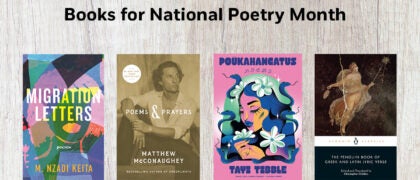

Books for Arab American Heritage Month
In honor of Arab American Heritage Month in April, we are sharing books by Arab and Arab American authors that share their culture, history, and personal lives.


1. Flow
2. Shearing Layers
3. "Nobody Cares What You Do In There": The Low Road
4. Houseproud: The High Road
5. Magazine Architecture: No Road
6. Unreal Estate
7. Preservation: A Quiet, Populist, Conservative, Victorious Revolution
8. The Romance of Maintenance
9. Vernacular: How Buildings Learn from Each Other
10. Function Melts Form: Satisficing Home and Office
11. The Scenario-buffered Building
12. Built for Change
APPENDIX: The Study of Buildings in Time
Recommended Bibliography: Books for Time-kindly Buildings
Index
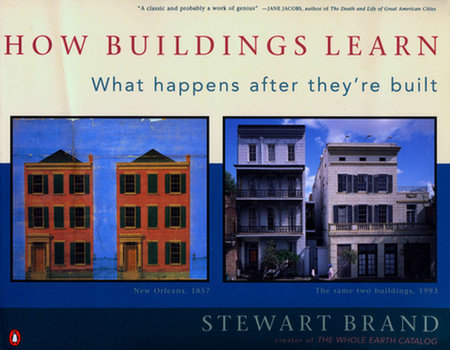
"A stunning exploration of the design of design … How Buildings Learn will irrevocably alter yor sense of place, space, and the artifacts that shape them."
—Michael Shrage, Wired
"Penetratingly original."
—Philip Morrison, Scientific American
"An extremely attractive volume that will forever alter the way we respond to the buildings around us. We may also hope it will alter the way architects design buildings."
—Harold Gilliam, San Francisco Chronicle
"A fascinating and indefinable book … How Buildings Learn is a hymn to entropy, a witty, heterodox book dedicated to kicking the stuffing out of the proposition that architecture is permanent and that buildings cannot adapt."
—Stephen Bayley, The Times (London)
"The book's diagnosis is clear and to the poiny, and its illustrations of how buildings change are both fascinating and instructive. This is, in short, one of the rare books that every architect should read."
—Thomas Fisher, editor, Progressive Architecture
"A book of good sound-bites and laser-sharp insight … No architecture students should complete their preliminary studies without reading it from cover to cover."
—Patric Hannay, The Architects' Journal
1. Flow
2. Shearing Layers
3. "Nobody Cares What You Do In There": The Low Road
4. Houseproud: The High Road
5. Magazine Architecture: No Road
6. Unreal Estate
7. Preservation: A Quiet, Populist, Conservative, Victorious Revolution
8. The Romance of Maintenance
9. Vernacular: How Buildings Learn from Each Other
10. Function Melts Form: Satisficing Home and Office
11. The Scenario-buffered Building
12. Built for Change
APPENDIX: The Study of Buildings in Time
Recommended Bibliography: Books for Time-kindly Buildings
Index
"A stunning exploration of the design of design … How Buildings Learn will irrevocably alter yor sense of place, space, and the artifacts that shape them."
—Michael Shrage, Wired
"Penetratingly original."
—Philip Morrison, Scientific American
"An extremely attractive volume that will forever alter the way we respond to the buildings around us. We may also hope it will alter the way architects design buildings."
—Harold Gilliam, San Francisco Chronicle
"A fascinating and indefinable book … How Buildings Learn is a hymn to entropy, a witty, heterodox book dedicated to kicking the stuffing out of the proposition that architecture is permanent and that buildings cannot adapt."
—Stephen Bayley, The Times (London)
"The book's diagnosis is clear and to the poiny, and its illustrations of how buildings change are both fascinating and instructive. This is, in short, one of the rare books that every architect should read."
—Thomas Fisher, editor, Progressive Architecture
"A book of good sound-bites and laser-sharp insight … No architecture students should complete their preliminary studies without reading it from cover to cover."
—Patric Hannay, The Architects' Journal
In honor of Arab American Heritage Month in April, we are sharing books by Arab and Arab American authors that share their culture, history, and personal lives.
For National Poetry Month in April, we are sharing poetry collections and books about poetry by authors who have their own stories to tell. These poets delve into history, reimagine the present, examine poetry itself—from traditional poems many know and love to poems and voices that are new and original.