Download high-resolution image
Listen to a clip from the audiobook
audio play button
0:00
0:00

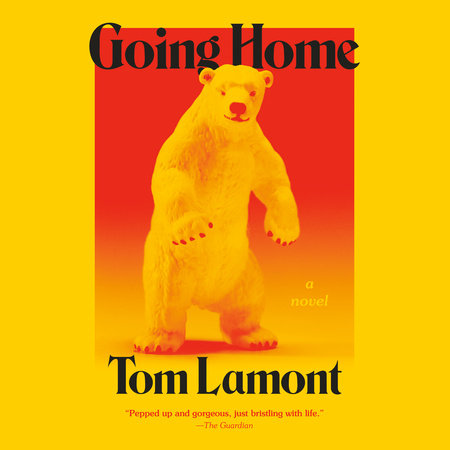
Going Home

A Novel

Author Tom Lamont
Read by Jot Davies
Listen to a clip from the audiobook
audio play button
0:00
0:00
Audiobook Download
On sale Jan 14, 2025 | 10 Hours and 30 Minutes | 9798217013364

See Additional Formats
Going Home is a sparkling, funny, bighearted story of family and what happens when three men—all of whom are completely ill-suited for fatherhood—take charge of a toddler following an unexpected loss

Téo Erskine, now in his thirties, has moved on from childish things: He has a good job, a slick apartment in London, and when he heads back to the suburbs on the occasional weekend to visit his old friends, he makes sure everyone knows he can afford to pick up the tab. So what if he asks a few too many questions about Lia, the girl of their group, wondering if she will come out, if she’s seeing anyone, if she might give him another shot? Téo is hazily aware that something possibly happened between Lia and Ben Mossam, Téo’s closest friend and his greatest annoyance, but he can’t bring himself to ask. Lia, meanwhile, has no time to indulge their rivalry. She’s now the single mother of a toddler son, a kid named Joel that Téo occasionally (and halfheartedly) offers to babysit.

Téo is home for one such weekend when the unthinkable happens—a tragedy in the heart of their group—and he suddenly finds himself the unlikely guardian for little Joel. Together with his father, Vic, Ben Mossam, and Sybil, Lia’s beguiling rabbi, they bide time until they can find a proper home for Joel, teaching him to play video games, plying him with chicken nuggets and waffles, and learning to sing him lullabies at night. But when a juvenile mistake leads to a terrible betrayal, Téo must decide what kind of man he wants to be. Wise, relatable, and blissfully laugh-out-loud funny, Going Home is a captivating first novel that explores the mysterious ways children can force us to grow up fast while simultaneously keeping us young forever.
ONE

Téo

The North Circular Road was a threshold. As soon as Téodor Erskine crossed those four lanes of traffic and drove into the London suburbs on the other side, he felt he’d left the city behind. It was misty tonight in Enfield, winter’s dregs turning his childhood neighbourhood a colour that was grey-­green and miry as seawater. When he reached Ben’s road, Téo, obedient to rules, squinted to read a sign that laid out the local restrictions. Thirty minutes to wait . . . then he could park for free. He hesitated.

Park anyway.

That’s what Ben Mossam would’ve said. Meaning, I’ve got the cash in my pocket. I’ll cover any fines you get.

Park anywhere.

That’s what Lia Woods would have said. Meaning, who cares about a sign? What sign?

Lia was their group’s one girl. He hoped she would join them later in the pub; she still lived on these roads. Decision made, he carried on driving, ready to use up half an hour in the nearest shop. He asked himself, will I buy the expensive beers to remind them that I’m doing well in my job? Will I buy those thicker, better crisps?


“Don’t—­I’m thinking. You’re someone’s son.”

“That’s right,” he said.

“Don’t tell me.”

Téo understood. He was almost memorable. Middle-­sized and not athletic, he was shorter in the world than he was in his head. If he were ever shown a menu of genie wishes, he meant to add five inches to his height and leave matters there. He looked all right in photos. Especially his chin: it had a rare central dimple. At the age of thirty, Téo kept his hair short against the threat of it spooling out coiled and unruly, which he had been famed for and lightly teased about at school. For clothes he favoured zips, pockets, your lasting materials. He was loyal to his colours. He wore the same pale blues or charcoal greys or over-­washed whites, whether for work or a weekend in Enfield or only to hang about doing nothing in his rented flat by the river.

Téo was sure that London had taken the measure of him. London had reached its decision. He was average as a citizen. And in among his responses to this (some frustration, some self-­pity) there was peace. Where he lived now, in Aldgate, near London’s financial district, nobody expected much of him. Neighbours on his floor called him Tee-­oh instead of Tay-­oh, leaving out the Polish stress. He could escape the building with nods in reply to greetings, silences not chats. He hadn’t made many friends since he moved in from the suburbs, a deliberate fending-­off of additions to the guilt they could still exact from him at home. He had been careful to arrange a life in which he could leave obligations at the door of his flat, next to the coins he saved for Ben’s poker nights and his shoes that were comfiest for driving.

Téo went home once a month.

He heard complaints if his visits became any less frequent than that. Instead of taking the train, north out of Liverpool Street, he liked to drive—­slowcoaching up the A10 on a Friday after work, light to light, passing bars and pubs and cemeteries, later the hospital where he was born. This far north, the suburbs touching countryside, one location was always quite far from another. He felt better bringing the car.

“I’m Vic Erskine’s son,” he told the shopkeeper, “Téodor. People call me Téo.”

“Ah,” said the man. “Been ill, hasn’t he?”

“Who, my dad? Yeah.”

“He’s got Parkinson’s, hasn’t he?”

This place!

“It’s something like Parkinson’s,” Téo explained. “One of the surname diseases. Your slow declines. I come back to see him as often as I can.”

They had verbal contractions, specific to this suburb, that were rarely heard anywhere else. Along laddered roads of terraced houses, on estates or mansion roads, they spoke a muddled Londonese that was everything: part Irish, Asian, African, Mediterranean, Jewish, Eastern European. It sounded good tonight. Téo was excited, suddenly, about seeing old friends.

He was asked by the shopkeeper, “How far away do you live these days?”

“D’you know Aldgate?”

He had ferried some beers to the counter. He chose crisps.

“Only Aldgate,” whistled the shopkeeper.

“Bit east as well. You might call it as far as Whitechapel, yeah.”

“Not that far though.”

“I hear you. I should visit back more often. There’s no excuse.”

Except this, thought Téo, the grief, the guilt.


“Boys,” he told them in greeting.

Cards were being shuffled. Stacks of one-­ and two-­pound coins were being put in order on the table. Téo sat in an empty chair. There was that armpit stench of raw weed and their same sixth-­form favourites played from a speaker on the kitchen counter. It was about to be a Friday session, the format of which hadn’t changed in a decade. Poker at Ben’s then pub. Before anything else the crafted spliffs, held for the next man around the table with the stub pinched carefully, like something of interest found on the floor. Téo (big on the diplomatic smiles, not about to judge them so soon) passed around the offered spliff without comment. There was some teasing tonight about his major career decisions. He joined in where he could.

“Where did you leave us for, T? Car college?”

Snorts, as cards were sent skimming around the table.

Gathered in by player after player, these cards were examined for their value. People had a habit they copied from Ben. They put their cards on the table and they pressed their fingers down on top, as if each card had a mind of its own, as if each card might choose to flip over and reveal itself if not properly held in check. Ben’s voice broke first out of everyone. He was tallest. He seemed to snooze through the arrival of his muscles. Thanks to Ben they all learned the unbestable social move that was the no-­show, its consequences for others, that chilly redundant feeling that ran through you as soon as you realised you were the dickhead left to wait. Téo was irritated to feel it tonight. He asked, “Where’s Ben, if we’re starting already?”

They were in the Mossam house, seated around a Mossam-­owned table, but this was no guarantee of Ben Mossam’s company. A roamer, Ben stashed house keys in the gardens front and back, free for anybody to use. Properly described, the house belonged to his parents. It was left to him one miracle day in the new millennium when they had graduated from school. Ben’s mum and dad were about as eager to sack off Enfield as Téo. They flew out to their second home in the Mediterranean and rarely came back, leaving the house in their son’s care for a term without limit. It was lofty and many-­bedroomed. It had a lift. Ben figured out his economic advantage soon enough. While the others in the group went to college or took jobs, settling for the agreed patterns of a swap whereby hours of your freedom went out one door and what came in the other was meant to be the stuff of life, a broader mind, your opportunities . . . while the others knuckled down and worked, Ben never did. He never had to.

“Will he be at the pub?” Téo asked. “Will anyone be there?”

He was winning at cards for once. A sullen quiet had settled over the table.

“Pub?” they asked. There were pouts. People shrugged.

“It’ll be the same lot as always in the pub.”

“The usual lot.”

“You lot, yeah,” Téo said. “Anyone else though?”

Finally a few of his friends smirked. As a group they had a note they could hit, an elastic, elated “Oh-­h-­h-­h-­h!” that meant some suspicion of theirs had been confirmed, some trap fallen into. “Téo’s like: he comes back to see us.”

“When in fact.”

“He wants to know about Lia Woods.”

“He wants his second chance with Lia.”

“Second chance!”

“More like ninth chance.”

“Ninetieth.”

They roared, well pleased. Whenever Téo was away from here, commuting to his job, eating takeaways and watching episodes, these friends at home receded to become a distant choral voice in his emails and his message threads. They weren’t important. They weren’t always distinguishable as individuals, with their teases and repetitions, their limited repertoire of jokes. Some of them weren’t even in the group the last time Téo lived in Enfield. They’d only been absorbed by default, for reasons of having hung around long enough he supposed. They adored Ben and relied on Ben’s energy and ideas, his money. This Friday night would feel undercooked till Ben showed up.

“Oh-­h-­h-­h-­h!” the group was singing.

“I’m here to see my dad,” Téo corrected them.

So they took pity, and Téo felt guilty about using his dad to deflect a cuss.

He said, “I haven’t seen her in a few months. How’s she doing?”

“Lia?”

Téo waited.

“She’s the same. She isn’t any better.”

“You know Lia.”

“She might be out tonight,” someone said.

“If she’s up to it, she reckons. If she can find someone to mind the boy.”

Téo had met Lia’s son Joel a few times. He had done a bit of babysitting. There was a teenager Lia relied on. She had an elderly neighbour waiting on the sidelines. If either of those options fell through, and if Téo happened to be back for the weekend, Lia asked. He had made her promise she would ask. Summoned over, three or four times so far, he got a hug by the door and maybe a compliment, about how he was the only one in their group who was mature enough to be trusted like this. But his babysitting hadn’t amounted to much. Whenever Lia left him alone, Téo sat on her sofa for a few hours, alert and suspicious, expecting some test of his ingenuity or his reflexes. He was apprehensive about the business with the nappies and the milk, the telling them they couldn’t eat any more sweets and such. Was it water you did give small children or never gave them? In fact, every time Téo had gone over there to babysit, the boy just slept. Occasionally Téo ventured into the dark and pungent bedroom to make shushing noises. That was it. He wondered whether parents didn’t hype up the difficulty, their innocent joke at other people’s expense.

He hoped she would be at the pub, if only so that he could try some of the kinder, wiser enquiries this crowd would never stretch to. He looked at his cards and he bet big by his standards. The track that played was kind to his moment, cresting into a breathless explanation of a rapper’s big win. “Phew,” Téo said, when the remaining players showed inferior cards. He claimed his money, dragging a mess of coins towards his lap.


From the front of the house there was the jangle of an opening door and a slack, shouted: “Yo.” Everyone sat straighter. Téo criss-­crossed his hands to clear them of the feel of touched money.

Ben Mossam was pharaoh in this crowd. Be your good fortune (you understood) to get an audience right away. Téo watched his old friend as he entered the kitchen, moving slowly and deliberately around the table and placing his hands on everyone’s shoulders as though to press them back into their chairs, no need to stand for me, no need . . . How long-­limbed he was, thought Téo, how restless, with the insect energy. Ben had had terrible skin at school, thank God. For years there was lots of conspicuous defusing work going on between his chin and his skullcap. Those problems had long since cleared. Ben was handsome.

The last around the table to be reached in greeting, Téo rose out of his chair. He timed it awkwardly, right as more cards were sent skimming in his direction. One of the cards slipped over the side of the table and fluttered to the floor: a valuable king.

Téo knelt to retrieve it.
© Paul Stuart
TOM LAMONT is an award-winning journalist and one of the founding writers for the Guardian’s Long Reads. He is the interviewer of choice for Adele and Harry Styles, having written in depth about both of these musicians since they first emerged to fame in the 2010s. View titles by Tom Lamont
Named one of The Guardian's best fiction books of 2024

“Funny and poignant, bittersweet and moving.... Going Home made me cry on more than one occasion, and laugh out loud many more times. It’s a terrific reminder that what binds us to our loved ones isn’t blood but the care we take to keep them close, and our ability to show up for them when we screw it up on the first go-round.”
—Isaac Fitzgerald, The New York Times

"Brilliantly observed....Lamont’s story of a make-do family revels in the often comically porous borders of faith, home, and adulthood."
The New Yorker

"Lamont explores the trade-offs of parenthood, the tidal pull of long-held bonds, and the dissonance of joy amid heartbreak in this witty, poignant debut."
—People

"A wholly engaging and...affecting tale about friendship, fatherhood, family ties, and finding the ability to love unconditionally.... Infused with a steady supply of warmth, pathos, and sardonic wit....The novel’s standout feature is its expertly drawn characters. Lamont rotates their perspectives for each chapter and in doing so brings us closer to them."
—Malcolm Forbes, The Boston Globe

“It’s rare to read something that captures with such unsentimentality a child’s range, their rapidly shifting obsessions, the quiddities of their language, their cunning wiles.... I’ve read Going Home twice now and I still don’t feel as if I’ve tapped its power. Children seem to be more alive than adults, keener, less jaded, and this novel feels the same, pepped up and gorgeous, just bristling with life.”
—Olivia Laing, The Guardian

“A bittersweet and moving debut that beautifully explores male friendship and what it means to be a father.”
Good Housekeeping

"This coming-of-age debut is hilariously written and the ideal 'I’m looking to feel something' read."
—The Skimm

“This novel explores the glory and sacrifice involved in learning to love.”
—The Economist

"Lam­ont writes with an affa­ble style that is wise to vary­ing notions of mas­culin­i­ty.... We are deliv­ered real, vivid char­ac­ters in all their messy glo­ry, craft­ed with such sen­si­tiv­i­ty that read­ers will care about them long after clos­ing the book."
—Megan Peck Shub, Jewish Book Council

"A trio of unlikely British men are tasked with unexpected fatherhood duties in the care of a delightfully inquisitive 4-year-old named Joel. The novel’s unforgettable characters and emphasis on caregiving and friendship spread a poignant and joyful message."
—The Christian Science Monitor

“Someone put Tom Lamont’s Going Home in my hand the other day and I was soon involved in his lovely, exact sentences and perceptions, building a poignant and generous story about some men looking after a baby.”
—Tessa Hadley, The Daily Express

"A meltingly warm comedy."
The Observer, "Top 10 best debut novelists of 2024"

“Well-drawn characters, believable dialogue and nuanced emotions cast new light on love in this bittersweet book.”
Sunday Express


“Good prose comes easily to Lamont; it can feel impressive and judicious without bring precious....Lamont continues to prove himself to be a champion and poetic transcriber of the local....Going Home has the lot. It has been a while since I’ve read a piece of straightforward British realism and been this impressed.”
—Jonathan McAloon, Financial Times

“Saddling his main characters with a child gives Tom Lamont scope to set his sharp debut novel, Going Home, in the burgeoning “dad lit” genre: hapless man wrestles with new arrival while making witty-yet-moving observations....His characters, to me, felt intensely real.”
Susie Mesure, The Telegraph

"The gently comic, bittersweet story of a London man finding himself with responsibility for a two-year-old boy, in all his delightful, demanding, exhausting energy."
—Justine Jordan, The Guardian

“A spirited, shrewd debut.”
Daily Telegraph, "The Best 38 Novels of 2024 So Far"

“A beautiful, funny tale of London and lives new and old.”
Jonathan Dean, Sunday Times

“Tom Lamont’s debut novel, Going Home, set in the Jewish community in Enfield, north London, has charm to burn.”
John Self, The Guardian

“There’s a lot of fun to be had in this excellent debut centred on friendship, filial bonds and the demands of childcare.”
Daily Mail


“The characters’ flaws add vivacity and realism to the narrative, as well as providing constant ups and downs. From the imperfections of life, Lamont has fashioned a poignant work of fiction.”
New Statesman

“Vividly rendered...with emphasis on character and its warm, witty dialogue, Going Home is splendidly old fashioned but also strikingly modern in its themes and set-ups, especially its broader exploration of home and family.”
Jude Cook, Times Literary Supplement

“Well-drawn characters, believable dialogue and nuanced emotions cast new light on love in this bittersweet book.”
Sunday Express

“An affecting debut about fatherhood and male friendship.”
Inews, "Best books in June"

“A journey into a rarely explored territory.”
Sainsbury’s Magazine

“Touching....Well-drawn characters, believable dialogue and nuanced emotions cast new light on life in this bittersweet book."
Press Association

“A bittersweet story casting new light on love.”
—Daily Mirror

“Lamont’s deft blending of humour and pathos marks him down as a writer to watch.”
Max Davidson, The Mail on Sunday

“Well-drawn characters, believable dialogue and nuanced emotions cast new light on love in this bittersweet book.”
—The Herald

“What most impresses about Going Home is the brilliant portrait of Joel....This is a 'sharp,' refreshing debut.”
The Week

“Subtle and moving....Well-drawn characters, believable dialogue and nuanced emotions cast new light on love in this bittersweet book.”
—Cambridge News

“Very funny in places and deeply poignant in others—I loved it."
India Knight, "Home" Substack

Going Home might feature one of the greatest iterations of the quintessentially British 'forever-a-lad' archetype....I know so may guys like Benjamin Mossam, indeed most of my dearest friends remind me of him, but never found a novel that portrayed them quite the same way, definitely not so fondly and with such texture and complexity.”
Bartolomeo Sala, Something Curated


“[A] fine and spirit-lifting debut novel of friendship, fatherhood, growth and forgiveness. A bluff song of praise to North London, peopled by engaging, fallible characters, and rich in glinting turns of phrase.”
—David Mitchell, Author of Utopia Avenue

“A tender, original, finely-paced debut.”
Pandora Sykes, journalist and author of How Do We Know We're Doing it Right

“I will never forget these characters: so pained and funny, so brilliantly drawn, wrestled with and forgiven.”
Helen Garner, author of This House of Grief


“A remarkably assured, moving, melancholy and funny debut.”
—John Banville, bestselling author of The Lock-Up

Going Home is a poignant yet funny novel about three men taking turns at shouldering responsibility and shrugging it off, at worrying and causing worry, at giving care and needing it. Tom Lamont writes in clear, swift prose about the power struggles that exist in even the most living of families and the longest of friendships. A lyrical, hypnotic delight."
—Katherine Heiny, author of Games and Rituals


“A debut which skilfully and tenderly explores male relationships, belonging and what we leave behind. I adored every moment. The characters have stayed with me ever since.”
—Bella Mackie, author of How to Kill Your Family

“Bittersweet, funny and moving, GOING HOME is all this but also has a bright ring of truth which chimes on every page.”
—Claire Fuller, author of Unsettled Ground

“I enjoyed this sharp, tender novel of love and loss set in a scrupulously observed London suburb. From tragic beginnings it builds a slow fire of hope as its characters learn new ways to live and care for each other.”
—Adam Foulds, author of The Quickening Maze

“Deftly written, GOING HOME is one of the best debuts I’ve read in a long time. Joel and Téo crept into my heart and I did not want to let them go. Lamont’s impressive skill as a writer spills out of every page.”
—Anne Griffin, author of The Island of Longing

“In capturing the gradual and thorny journey of Joel and Téo towards becoming father and son, almost despite themselves, Lamont does something remarkable....Lamont shows that parenthood is made in the parenting, not in any blood connection. And in this honest depiction, it consists of frustration, impatience, poor sleep and rapturous moments of comedy, love and tenderness.”
Literary Review

“[A] poignant, immersive and finely observed novel."
The Bookseller, "Editor’s Choice"

"Going Home overflows with heart, and its characters feel real with their multitude of dreams, fears, serious self-doubts and fierce loyalties.... Lamont paces events with precision and humor, asking life’s big questions regarding family and friendship, duty and devotion.... The debut of a gifted writer whose readers will find themselves feeling better, somehow, about the world."
BookPage

"There is so much to love about this book, foremost the poignantly, sometimes painfully detailed portrait of 30-something guys....Joel himself—his way of speaking, his tantrums, his predilections, his memory—is one of the most vivid fictional children since Jack in Room....Their synagogue has a new rabbi, a woman named Sibyl Challis, who is also the best rabbi character in recent memory....A great premise, a great story, but most of all, great characters."
Kirkus (starred review)

"The shifts in perspective and the rich characterization [in Going Home] are similar to those of Jonathan Franzen....Lamont superbly depicts neurodegenerative decline and complex family dynamics in his first novel. Brilliantly capturing mundane and surprising aspects of raising a child, this is a fascinating portrait of parenting, the British Jewish community, and the struggle to break ties that may be holding you back."
—Booklist

About

Going Home is a sparkling, funny, bighearted story of family and what happens when three men—all of whom are completely ill-suited for fatherhood—take charge of a toddler following an unexpected loss

Téo Erskine, now in his thirties, has moved on from childish things: He has a good job, a slick apartment in London, and when he heads back to the suburbs on the occasional weekend to visit his old friends, he makes sure everyone knows he can afford to pick up the tab. So what if he asks a few too many questions about Lia, the girl of their group, wondering if she will come out, if she’s seeing anyone, if she might give him another shot? Téo is hazily aware that something possibly happened between Lia and Ben Mossam, Téo’s closest friend and his greatest annoyance, but he can’t bring himself to ask. Lia, meanwhile, has no time to indulge their rivalry. She’s now the single mother of a toddler son, a kid named Joel that Téo occasionally (and halfheartedly) offers to babysit.

Téo is home for one such weekend when the unthinkable happens—a tragedy in the heart of their group—and he suddenly finds himself the unlikely guardian for little Joel. Together with his father, Vic, Ben Mossam, and Sybil, Lia’s beguiling rabbi, they bide time until they can find a proper home for Joel, teaching him to play video games, plying him with chicken nuggets and waffles, and learning to sing him lullabies at night. But when a juvenile mistake leads to a terrible betrayal, Téo must decide what kind of man he wants to be. Wise, relatable, and blissfully laugh-out-loud funny, Going Home is a captivating first novel that explores the mysterious ways children can force us to grow up fast while simultaneously keeping us young forever.

Excerpt

ONE

Téo

The North Circular Road was a threshold. As soon as Téodor Erskine crossed those four lanes of traffic and drove into the London suburbs on the other side, he felt he’d left the city behind. It was misty tonight in Enfield, winter’s dregs turning his childhood neighbourhood a colour that was grey-­green and miry as seawater. When he reached Ben’s road, Téo, obedient to rules, squinted to read a sign that laid out the local restrictions. Thirty minutes to wait . . . then he could park for free. He hesitated.

Park anyway.

That’s what Ben Mossam would’ve said. Meaning, I’ve got the cash in my pocket. I’ll cover any fines you get.

Park anywhere.

That’s what Lia Woods would have said. Meaning, who cares about a sign? What sign?

Lia was their group’s one girl. He hoped she would join them later in the pub; she still lived on these roads. Decision made, he carried on driving, ready to use up half an hour in the nearest shop. He asked himself, will I buy the expensive beers to remind them that I’m doing well in my job? Will I buy those thicker, better crisps?


“Don’t—­I’m thinking. You’re someone’s son.”

“That’s right,” he said.

“Don’t tell me.”

Téo understood. He was almost memorable. Middle-­sized and not athletic, he was shorter in the world than he was in his head. If he were ever shown a menu of genie wishes, he meant to add five inches to his height and leave matters there. He looked all right in photos. Especially his chin: it had a rare central dimple. At the age of thirty, Téo kept his hair short against the threat of it spooling out coiled and unruly, which he had been famed for and lightly teased about at school. For clothes he favoured zips, pockets, your lasting materials. He was loyal to his colours. He wore the same pale blues or charcoal greys or over-­washed whites, whether for work or a weekend in Enfield or only to hang about doing nothing in his rented flat by the river.

Téo was sure that London had taken the measure of him. London had reached its decision. He was average as a citizen. And in among his responses to this (some frustration, some self-­pity) there was peace. Where he lived now, in Aldgate, near London’s financial district, nobody expected much of him. Neighbours on his floor called him Tee-­oh instead of Tay-­oh, leaving out the Polish stress. He could escape the building with nods in reply to greetings, silences not chats. He hadn’t made many friends since he moved in from the suburbs, a deliberate fending-­off of additions to the guilt they could still exact from him at home. He had been careful to arrange a life in which he could leave obligations at the door of his flat, next to the coins he saved for Ben’s poker nights and his shoes that were comfiest for driving.

Téo went home once a month.

He heard complaints if his visits became any less frequent than that. Instead of taking the train, north out of Liverpool Street, he liked to drive—­slowcoaching up the A10 on a Friday after work, light to light, passing bars and pubs and cemeteries, later the hospital where he was born. This far north, the suburbs touching countryside, one location was always quite far from another. He felt better bringing the car.

“I’m Vic Erskine’s son,” he told the shopkeeper, “Téodor. People call me Téo.”

“Ah,” said the man. “Been ill, hasn’t he?”

“Who, my dad? Yeah.”

“He’s got Parkinson’s, hasn’t he?”

This place!

“It’s something like Parkinson’s,” Téo explained. “One of the surname diseases. Your slow declines. I come back to see him as often as I can.”

They had verbal contractions, specific to this suburb, that were rarely heard anywhere else. Along laddered roads of terraced houses, on estates or mansion roads, they spoke a muddled Londonese that was everything: part Irish, Asian, African, Mediterranean, Jewish, Eastern European. It sounded good tonight. Téo was excited, suddenly, about seeing old friends.

He was asked by the shopkeeper, “How far away do you live these days?”

“D’you know Aldgate?”

He had ferried some beers to the counter. He chose crisps.

“Only Aldgate,” whistled the shopkeeper.

“Bit east as well. You might call it as far as Whitechapel, yeah.”

“Not that far though.”

“I hear you. I should visit back more often. There’s no excuse.”

Except this, thought Téo, the grief, the guilt.


“Boys,” he told them in greeting.

Cards were being shuffled. Stacks of one-­ and two-­pound coins were being put in order on the table. Téo sat in an empty chair. There was that armpit stench of raw weed and their same sixth-­form favourites played from a speaker on the kitchen counter. It was about to be a Friday session, the format of which hadn’t changed in a decade. Poker at Ben’s then pub. Before anything else the crafted spliffs, held for the next man around the table with the stub pinched carefully, like something of interest found on the floor. Téo (big on the diplomatic smiles, not about to judge them so soon) passed around the offered spliff without comment. There was some teasing tonight about his major career decisions. He joined in where he could.

“Where did you leave us for, T? Car college?”

Snorts, as cards were sent skimming around the table.

Gathered in by player after player, these cards were examined for their value. People had a habit they copied from Ben. They put their cards on the table and they pressed their fingers down on top, as if each card had a mind of its own, as if each card might choose to flip over and reveal itself if not properly held in check. Ben’s voice broke first out of everyone. He was tallest. He seemed to snooze through the arrival of his muscles. Thanks to Ben they all learned the unbestable social move that was the no-­show, its consequences for others, that chilly redundant feeling that ran through you as soon as you realised you were the dickhead left to wait. Téo was irritated to feel it tonight. He asked, “Where’s Ben, if we’re starting already?”

They were in the Mossam house, seated around a Mossam-­owned table, but this was no guarantee of Ben Mossam’s company. A roamer, Ben stashed house keys in the gardens front and back, free for anybody to use. Properly described, the house belonged to his parents. It was left to him one miracle day in the new millennium when they had graduated from school. Ben’s mum and dad were about as eager to sack off Enfield as Téo. They flew out to their second home in the Mediterranean and rarely came back, leaving the house in their son’s care for a term without limit. It was lofty and many-­bedroomed. It had a lift. Ben figured out his economic advantage soon enough. While the others in the group went to college or took jobs, settling for the agreed patterns of a swap whereby hours of your freedom went out one door and what came in the other was meant to be the stuff of life, a broader mind, your opportunities . . . while the others knuckled down and worked, Ben never did. He never had to.

“Will he be at the pub?” Téo asked. “Will anyone be there?”

He was winning at cards for once. A sullen quiet had settled over the table.

“Pub?” they asked. There were pouts. People shrugged.

“It’ll be the same lot as always in the pub.”

“The usual lot.”

“You lot, yeah,” Téo said. “Anyone else though?”

Finally a few of his friends smirked. As a group they had a note they could hit, an elastic, elated “Oh-­h-­h-­h-­h!” that meant some suspicion of theirs had been confirmed, some trap fallen into. “Téo’s like: he comes back to see us.”

“When in fact.”

“He wants to know about Lia Woods.”

“He wants his second chance with Lia.”

“Second chance!”

“More like ninth chance.”

“Ninetieth.”

They roared, well pleased. Whenever Téo was away from here, commuting to his job, eating takeaways and watching episodes, these friends at home receded to become a distant choral voice in his emails and his message threads. They weren’t important. They weren’t always distinguishable as individuals, with their teases and repetitions, their limited repertoire of jokes. Some of them weren’t even in the group the last time Téo lived in Enfield. They’d only been absorbed by default, for reasons of having hung around long enough he supposed. They adored Ben and relied on Ben’s energy and ideas, his money. This Friday night would feel undercooked till Ben showed up.

“Oh-­h-­h-­h-­h!” the group was singing.

“I’m here to see my dad,” Téo corrected them.

So they took pity, and Téo felt guilty about using his dad to deflect a cuss.

He said, “I haven’t seen her in a few months. How’s she doing?”

“Lia?”

Téo waited.

“She’s the same. She isn’t any better.”

“You know Lia.”

“She might be out tonight,” someone said.

“If she’s up to it, she reckons. If she can find someone to mind the boy.”

Téo had met Lia’s son Joel a few times. He had done a bit of babysitting. There was a teenager Lia relied on. She had an elderly neighbour waiting on the sidelines. If either of those options fell through, and if Téo happened to be back for the weekend, Lia asked. He had made her promise she would ask. Summoned over, three or four times so far, he got a hug by the door and maybe a compliment, about how he was the only one in their group who was mature enough to be trusted like this. But his babysitting hadn’t amounted to much. Whenever Lia left him alone, Téo sat on her sofa for a few hours, alert and suspicious, expecting some test of his ingenuity or his reflexes. He was apprehensive about the business with the nappies and the milk, the telling them they couldn’t eat any more sweets and such. Was it water you did give small children or never gave them? In fact, every time Téo had gone over there to babysit, the boy just slept. Occasionally Téo ventured into the dark and pungent bedroom to make shushing noises. That was it. He wondered whether parents didn’t hype up the difficulty, their innocent joke at other people’s expense.

He hoped she would be at the pub, if only so that he could try some of the kinder, wiser enquiries this crowd would never stretch to. He looked at his cards and he bet big by his standards. The track that played was kind to his moment, cresting into a breathless explanation of a rapper’s big win. “Phew,” Téo said, when the remaining players showed inferior cards. He claimed his money, dragging a mess of coins towards his lap.


From the front of the house there was the jangle of an opening door and a slack, shouted: “Yo.” Everyone sat straighter. Téo criss-­crossed his hands to clear them of the feel of touched money.

Ben Mossam was pharaoh in this crowd. Be your good fortune (you understood) to get an audience right away. Téo watched his old friend as he entered the kitchen, moving slowly and deliberately around the table and placing his hands on everyone’s shoulders as though to press them back into their chairs, no need to stand for me, no need . . . How long-­limbed he was, thought Téo, how restless, with the insect energy. Ben had had terrible skin at school, thank God. For years there was lots of conspicuous defusing work going on between his chin and his skullcap. Those problems had long since cleared. Ben was handsome.

The last around the table to be reached in greeting, Téo rose out of his chair. He timed it awkwardly, right as more cards were sent skimming in his direction. One of the cards slipped over the side of the table and fluttered to the floor: a valuable king.

Téo knelt to retrieve it.

Author

© Paul Stuart
TOM LAMONT is an award-winning journalist and one of the founding writers for the Guardian’s Long Reads. He is the interviewer of choice for Adele and Harry Styles, having written in depth about both of these musicians since they first emerged to fame in the 2010s. View titles by Tom Lamont

Praise

Named one of The Guardian's best fiction books of 2024

“Funny and poignant, bittersweet and moving.... Going Home made me cry on more than one occasion, and laugh out loud many more times. It’s a terrific reminder that what binds us to our loved ones isn’t blood but the care we take to keep them close, and our ability to show up for them when we screw it up on the first go-round.”
—Isaac Fitzgerald, The New York Times

"Brilliantly observed....Lamont’s story of a make-do family revels in the often comically porous borders of faith, home, and adulthood."
The New Yorker

"Lamont explores the trade-offs of parenthood, the tidal pull of long-held bonds, and the dissonance of joy amid heartbreak in this witty, poignant debut."
—People

"A wholly engaging and...affecting tale about friendship, fatherhood, family ties, and finding the ability to love unconditionally.... Infused with a steady supply of warmth, pathos, and sardonic wit....The novel’s standout feature is its expertly drawn characters. Lamont rotates their perspectives for each chapter and in doing so brings us closer to them."
—Malcolm Forbes, The Boston Globe

“It’s rare to read something that captures with such unsentimentality a child’s range, their rapidly shifting obsessions, the quiddities of their language, their cunning wiles.... I’ve read Going Home twice now and I still don’t feel as if I’ve tapped its power. Children seem to be more alive than adults, keener, less jaded, and this novel feels the same, pepped up and gorgeous, just bristling with life.”
—Olivia Laing, The Guardian

“A bittersweet and moving debut that beautifully explores male friendship and what it means to be a father.”
Good Housekeeping

"This coming-of-age debut is hilariously written and the ideal 'I’m looking to feel something' read."
—The Skimm

“This novel explores the glory and sacrifice involved in learning to love.”
—The Economist

"Lam­ont writes with an affa­ble style that is wise to vary­ing notions of mas­culin­i­ty.... We are deliv­ered real, vivid char­ac­ters in all their messy glo­ry, craft­ed with such sen­si­tiv­i­ty that read­ers will care about them long after clos­ing the book."
—Megan Peck Shub, Jewish Book Council

"A trio of unlikely British men are tasked with unexpected fatherhood duties in the care of a delightfully inquisitive 4-year-old named Joel. The novel’s unforgettable characters and emphasis on caregiving and friendship spread a poignant and joyful message."
—The Christian Science Monitor

“Someone put Tom Lamont’s Going Home in my hand the other day and I was soon involved in his lovely, exact sentences and perceptions, building a poignant and generous story about some men looking after a baby.”
—Tessa Hadley, The Daily Express

"A meltingly warm comedy."
The Observer, "Top 10 best debut novelists of 2024"

“Well-drawn characters, believable dialogue and nuanced emotions cast new light on love in this bittersweet book.”
Sunday Express


“Good prose comes easily to Lamont; it can feel impressive and judicious without bring precious....Lamont continues to prove himself to be a champion and poetic transcriber of the local....Going Home has the lot. It has been a while since I’ve read a piece of straightforward British realism and been this impressed.”
—Jonathan McAloon, Financial Times

“Saddling his main characters with a child gives Tom Lamont scope to set his sharp debut novel, Going Home, in the burgeoning “dad lit” genre: hapless man wrestles with new arrival while making witty-yet-moving observations....His characters, to me, felt intensely real.”
Susie Mesure, The Telegraph

"The gently comic, bittersweet story of a London man finding himself with responsibility for a two-year-old boy, in all his delightful, demanding, exhausting energy."
—Justine Jordan, The Guardian

“A spirited, shrewd debut.”
Daily Telegraph, "The Best 38 Novels of 2024 So Far"

“A beautiful, funny tale of London and lives new and old.”
Jonathan Dean, Sunday Times

“Tom Lamont’s debut novel, Going Home, set in the Jewish community in Enfield, north London, has charm to burn.”
John Self, The Guardian

“There’s a lot of fun to be had in this excellent debut centred on friendship, filial bonds and the demands of childcare.”
Daily Mail


“The characters’ flaws add vivacity and realism to the narrative, as well as providing constant ups and downs. From the imperfections of life, Lamont has fashioned a poignant work of fiction.”
New Statesman

“Vividly rendered...with emphasis on character and its warm, witty dialogue, Going Home is splendidly old fashioned but also strikingly modern in its themes and set-ups, especially its broader exploration of home and family.”
Jude Cook, Times Literary Supplement

“Well-drawn characters, believable dialogue and nuanced emotions cast new light on love in this bittersweet book.”
Sunday Express

“An affecting debut about fatherhood and male friendship.”
Inews, "Best books in June"

“A journey into a rarely explored territory.”
Sainsbury’s Magazine

“Touching....Well-drawn characters, believable dialogue and nuanced emotions cast new light on life in this bittersweet book."
Press Association

“A bittersweet story casting new light on love.”
—Daily Mirror

“Lamont’s deft blending of humour and pathos marks him down as a writer to watch.”
Max Davidson, The Mail on Sunday

“Well-drawn characters, believable dialogue and nuanced emotions cast new light on love in this bittersweet book.”
—The Herald

“What most impresses about Going Home is the brilliant portrait of Joel....This is a 'sharp,' refreshing debut.”
The Week

“Subtle and moving....Well-drawn characters, believable dialogue and nuanced emotions cast new light on love in this bittersweet book.”
—Cambridge News

“Very funny in places and deeply poignant in others—I loved it."
India Knight, "Home" Substack

Going Home might feature one of the greatest iterations of the quintessentially British 'forever-a-lad' archetype....I know so may guys like Benjamin Mossam, indeed most of my dearest friends remind me of him, but never found a novel that portrayed them quite the same way, definitely not so fondly and with such texture and complexity.”
Bartolomeo Sala, Something Curated


“[A] fine and spirit-lifting debut novel of friendship, fatherhood, growth and forgiveness. A bluff song of praise to North London, peopled by engaging, fallible characters, and rich in glinting turns of phrase.”
—David Mitchell, Author of Utopia Avenue

“A tender, original, finely-paced debut.”
Pandora Sykes, journalist and author of How Do We Know We're Doing it Right

“I will never forget these characters: so pained and funny, so brilliantly drawn, wrestled with and forgiven.”
Helen Garner, author of This House of Grief


“A remarkably assured, moving, melancholy and funny debut.”
—John Banville, bestselling author of The Lock-Up

Going Home is a poignant yet funny novel about three men taking turns at shouldering responsibility and shrugging it off, at worrying and causing worry, at giving care and needing it. Tom Lamont writes in clear, swift prose about the power struggles that exist in even the most living of families and the longest of friendships. A lyrical, hypnotic delight."
—Katherine Heiny, author of Games and Rituals


“A debut which skilfully and tenderly explores male relationships, belonging and what we leave behind. I adored every moment. The characters have stayed with me ever since.”
—Bella Mackie, author of How to Kill Your Family

“Bittersweet, funny and moving, GOING HOME is all this but also has a bright ring of truth which chimes on every page.”
—Claire Fuller, author of Unsettled Ground

“I enjoyed this sharp, tender novel of love and loss set in a scrupulously observed London suburb. From tragic beginnings it builds a slow fire of hope as its characters learn new ways to live and care for each other.”
—Adam Foulds, author of The Quickening Maze

“Deftly written, GOING HOME is one of the best debuts I’ve read in a long time. Joel and Téo crept into my heart and I did not want to let them go. Lamont’s impressive skill as a writer spills out of every page.”
—Anne Griffin, author of The Island of Longing

“In capturing the gradual and thorny journey of Joel and Téo towards becoming father and son, almost despite themselves, Lamont does something remarkable....Lamont shows that parenthood is made in the parenting, not in any blood connection. And in this honest depiction, it consists of frustration, impatience, poor sleep and rapturous moments of comedy, love and tenderness.”
Literary Review

“[A] poignant, immersive and finely observed novel."
The Bookseller, "Editor’s Choice"

"Going Home overflows with heart, and its characters feel real with their multitude of dreams, fears, serious self-doubts and fierce loyalties.... Lamont paces events with precision and humor, asking life’s big questions regarding family and friendship, duty and devotion.... The debut of a gifted writer whose readers will find themselves feeling better, somehow, about the world."
BookPage

"There is so much to love about this book, foremost the poignantly, sometimes painfully detailed portrait of 30-something guys....Joel himself—his way of speaking, his tantrums, his predilections, his memory—is one of the most vivid fictional children since Jack in Room....Their synagogue has a new rabbi, a woman named Sibyl Challis, who is also the best rabbi character in recent memory....A great premise, a great story, but most of all, great characters."
Kirkus (starred review)

"The shifts in perspective and the rich characterization [in Going Home] are similar to those of Jonathan Franzen....Lamont superbly depicts neurodegenerative decline and complex family dynamics in his first novel. Brilliantly capturing mundane and surprising aspects of raising a child, this is a fascinating portrait of parenting, the British Jewish community, and the struggle to break ties that may be holding you back."
—Booklist

Books for Women’s History Month

In honor of Women’s History Month in March, we are sharing books by women who have shaped history and have fought for their communities. Our list includes books about women who fought for racial justice, abortion rights, equality in the workplace, and ranges in topics from women in politics and prominent women in history to

Read more