
Books for Jewish American Heritage Month
In celebration of Jewish American Heritage Month in May, we are sharing books by authors who share their individual stories, experiences, and lives. Find our full collection of books here.


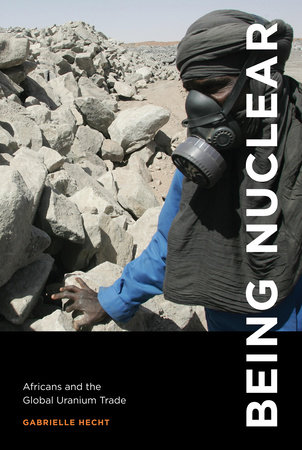
Uranium from Africa has long been a major source of fuel for nuclear power and atomic weapons, including the bomb dropped on Hiroshima. In 2003, after the infamous “yellow cake from Niger,” Africa suddenly became notorious as a source of uranium, a component of nuclear weapons. But did that admit Niger, or any of Africa's other uranium-producing countries, to the select society of nuclear states? Does uranium itself count as a nuclear thing? In this book, Gabrielle Hecht lucidly probes the question of what it means for something—a state, an object, an industry, a workplace—to be “nuclear.”
Hecht shows that questions about being nuclear—a state that she calls “nuclearity”—lie at the heart of today's global nuclear order and the relationships between “developing nations” (often former colonies) and “nuclear powers” (often former colonizers). Hecht enters African nuclear worlds, focusing on miners and the occupational hazard of radiation exposure. Could a mine be a nuclear workplace if (as in some South African mines) its radiation levels went undetected and unmeasured? With this book, Hecht is the first to put Africa in the nuclear world, and the nuclear world in Africa. By doing so, she remakes our understanding of the nuclear age.
Not only does the book stand out as one of the most comprehensive attempts to study the history of uranium mining in Africa, it also caters to an expansive academic audience—from historians of science and technology and sociologists and anthropologists of science, to those taking a broader interest in labour rights, public health issues and mining corporations.
—Jayita Sarkar, The British Journal for the History of Science—Being Nuclear has very important things to say about the legacies of empire. Hecht persuasively shows how global nuclear agencies reproduced colonial logics and inequalities... It seems destined to become essential reading for those interested in uranium and Africa, as well as in issues of global nuclearity.
—Journal of Modern History—Uranium from Africa has long been a major source of fuel for nuclear power and atomic weapons, including the bomb dropped on Hiroshima. In 2003, after the infamous “yellow cake from Niger,” Africa suddenly became notorious as a source of uranium, a component of nuclear weapons. But did that admit Niger, or any of Africa's other uranium-producing countries, to the select society of nuclear states? Does uranium itself count as a nuclear thing? In this book, Gabrielle Hecht lucidly probes the question of what it means for something—a state, an object, an industry, a workplace—to be “nuclear.”
Hecht shows that questions about being nuclear—a state that she calls “nuclearity”—lie at the heart of today's global nuclear order and the relationships between “developing nations” (often former colonies) and “nuclear powers” (often former colonizers). Hecht enters African nuclear worlds, focusing on miners and the occupational hazard of radiation exposure. Could a mine be a nuclear workplace if (as in some South African mines) its radiation levels went undetected and unmeasured? With this book, Hecht is the first to put Africa in the nuclear world, and the nuclear world in Africa. By doing so, she remakes our understanding of the nuclear age.
Not only does the book stand out as one of the most comprehensive attempts to study the history of uranium mining in Africa, it also caters to an expansive academic audience—from historians of science and technology and sociologists and anthropologists of science, to those taking a broader interest in labour rights, public health issues and mining corporations.
—Jayita Sarkar, The British Journal for the History of Science—Being Nuclear has very important things to say about the legacies of empire. Hecht persuasively shows how global nuclear agencies reproduced colonial logics and inequalities... It seems destined to become essential reading for those interested in uranium and Africa, as well as in issues of global nuclearity.
—Journal of Modern History—
In celebration of Jewish American Heritage Month in May, we are sharing books by authors who share their individual stories, experiences, and lives. Find our full collection of books here.
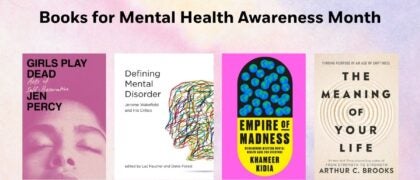
For Mental Health Awareness Month in May, we are sharing books to educate and raise awareness about mental health and the various factors that may affect it, and to provide tools and resources for student wellness. Find our full collection of titles here.
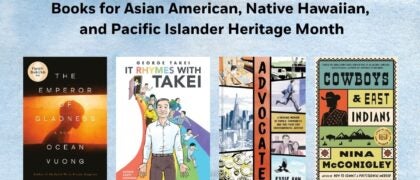
Each May, we honor the stories, histories, and cultures of Asian Americans, Native Hawaiians, and Pacific Islanders. Below is a selection of acclaimed fiction and nonfiction books by AANHPI creators to share with your students this month and throughout the year. Find our full collection of titles for Higher Education here.