Books for Arab American Heritage Month
In honor of Arab American Heritage Month in April, we are sharing books by Arab and Arab American authors that share their culture, history, and personal lives.
Michael Asher doesn't make typical installations. Instead, he extracts his art from the institutions in which it is shown, culling it from collections, histories, or museums' own walls. Since the late 1960s, Asher has been creating situations that have not only taught us about the conditions and contexts of contemporary art, but have worked to define it.
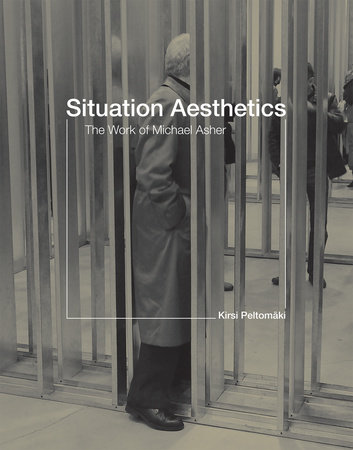
In Situation Aesthetics, Kirsi Peltomäki examines Asher's practice by analyzing the social situations that the artist constructs in his work for viewers, participants, and institutional representatives (including gallery directors, curators, and other museum staff members). Drawing on art criticism, the reports of viewers and participants in Asher's projects, and the artist's own archives, Peltomäki offers a comprehensive account of Asher's work over the past four decades. Because of the intensely site-specific nature of this work, as well as the artist's refusal to reconstruct past works or mount retrospectives, many of the projects Peltomäki discusses are described here for the first time.
By emphasizing the social and psychological sites of art rather than the production of autonomous art objects, Peltomäki argues, Asher constructs experientially complex situations that profoundly affect those who encounter them, bringing about both personal and institutional transformation.

Michael Asher doesn't make typical installations. Instead, he extracts his art from the institutions in which it is shown, culling it from collections, histories, or museums' own walls. Since the late 1960s, Asher has been creating situations that have not only taught us about the conditions and contexts of contemporary art, but have worked to define it.
In Situation Aesthetics, Kirsi Peltomäki examines Asher's practice by analyzing the social situations that the artist constructs in his work for viewers, participants, and institutional representatives (including gallery directors, curators, and other museum staff members). Drawing on art criticism, the reports of viewers and participants in Asher's projects, and the artist's own archives, Peltomäki offers a comprehensive account of Asher's work over the past four decades. Because of the intensely site-specific nature of this work, as well as the artist's refusal to reconstruct past works or mount retrospectives, many of the projects Peltomäki discusses are described here for the first time.
By emphasizing the social and psychological sites of art rather than the production of autonomous art objects, Peltomäki argues, Asher constructs experientially complex situations that profoundly affect those who encounter them, bringing about both personal and institutional transformation.
In honor of Arab American Heritage Month in April, we are sharing books by Arab and Arab American authors that share their culture, history, and personal lives.
For National Poetry Month in April, we are sharing poetry collections and books about poetry by authors who have their own stories to tell. These poets delve into history, reimagine the present, examine poetry itself—from traditional poems many know and love to poems and voices that are new and original.