Books for Universal Human Rights Month
For Universal Human Rights Month in December, we are sharing a collection of books that educate on the importance of the fundamental rights and freedoms of all people. Find the full collection of titles here.
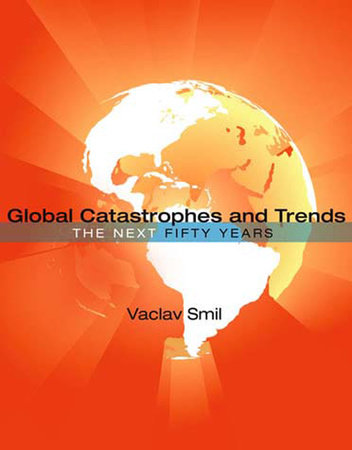
Fundamental change occurs most often in one of two ways: as a “fatal discontinuity,” a sudden catastrophic event that is potentially world changing, or as a persistent, gradual trend. Global catastrophes include volcanic eruptions, viral pandemics, wars, and large-scale terrorist attacks; trends are demographic, environmental, economic, and political shifts that unfold over time. In this provocative book, scientist Vaclav Smil takes a wide-ranging, interdisciplinary look at the catastrophes and trends the next fifty years may bring.
Smil first looks at rare but cataclysmic events, both natural and human-produced, then at trends of global importance, including the transition from fossil fuels to other energy sources and growing economic and social inequality. He also considers environmental change—in some ways an amalgam of sudden discontinuities and gradual change—and assesses the often misunderstood complexities of global warming.
Global Catastrophes and Trends does not come down on the side of either doom-and-gloom scenarios or techno-euphoria. Instead, Smil argues that understanding change will help us reverse negative trends and minimize the risk of catastrophe.

Fundamental change occurs most often in one of two ways: as a “fatal discontinuity,” a sudden catastrophic event that is potentially world changing, or as a persistent, gradual trend. Global catastrophes include volcanic eruptions, viral pandemics, wars, and large-scale terrorist attacks; trends are demographic, environmental, economic, and political shifts that unfold over time. In this provocative book, scientist Vaclav Smil takes a wide-ranging, interdisciplinary look at the catastrophes and trends the next fifty years may bring.
Smil first looks at rare but cataclysmic events, both natural and human-produced, then at trends of global importance, including the transition from fossil fuels to other energy sources and growing economic and social inequality. He also considers environmental change—in some ways an amalgam of sudden discontinuities and gradual change—and assesses the often misunderstood complexities of global warming.
Global Catastrophes and Trends does not come down on the side of either doom-and-gloom scenarios or techno-euphoria. Instead, Smil argues that understanding change will help us reverse negative trends and minimize the risk of catastrophe.
For Universal Human Rights Month in December, we are sharing a collection of books that educate on the importance of the fundamental rights and freedoms of all people. Find the full collection of titles here.