
Books for Arab American Heritage Month
In honor of Arab American Heritage Month in April, we are sharing books by Arab and Arab American authors that share their culture, history, and personal lives.


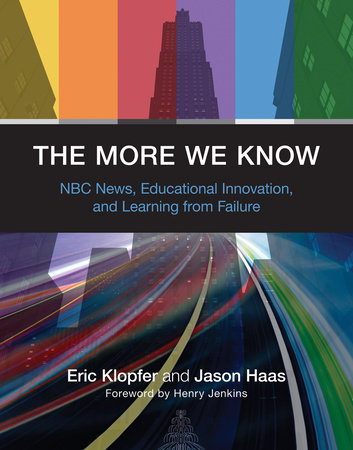
In 2006, young people were flocking to MySpace, discovering the joys of watching videos of cute animals on YouTube, and playing online games. Not many of them were watching network news on television; they got most of their information online. So when NBC and MIT launched iCue, an interactive learning venture that combined social networking, online video, and gaming in one multimedia educational site, it was perfectly in tune with the times. iCue was a surefire way for NBC to reach younger viewers and for MIT to test innovative educational methods in the real world. But iCue was a failure: it never developed an audience and was canceled as if it were a sitcom with bad ratings. In The More We Know, Eric Klopfer and Jason Haas, both part of the MIT development team, describe the rise and fall of iCue and what it can teach us about new media, old media, education, and the challenges of innovating in educational media.
Klopfer and Haas show that iCue was hampered by, among other things, an educational establishment focused on “teaching to the test,” television producers uncomfortable with participatory media, and confusion about the market. But this is not just a cautionary tale; sometimes more can be learned from an interesting failure than a string of successes. Today's educational technology visionaries (iPads for everyone!) might keep this lesson in mind.
In 2006, young people were flocking to MySpace, discovering the joys of watching videos of cute animals on YouTube, and playing online games. Not many of them were watching network news on television; they got most of their information online. So when NBC and MIT launched iCue, an interactive learning venture that combined social networking, online video, and gaming in one multimedia educational site, it was perfectly in tune with the times. iCue was a surefire way for NBC to reach younger viewers and for MIT to test innovative educational methods in the real world. But iCue was a failure: it never developed an audience and was canceled as if it were a sitcom with bad ratings. In The More We Know, Eric Klopfer and Jason Haas, both part of the MIT development team, describe the rise and fall of iCue and what it can teach us about new media, old media, education, and the challenges of innovating in educational media.
Klopfer and Haas show that iCue was hampered by, among other things, an educational establishment focused on “teaching to the test,” television producers uncomfortable with participatory media, and confusion about the market. But this is not just a cautionary tale; sometimes more can be learned from an interesting failure than a string of successes. Today's educational technology visionaries (iPads for everyone!) might keep this lesson in mind.
In honor of Arab American Heritage Month in April, we are sharing books by Arab and Arab American authors that share their culture, history, and personal lives.
For National Poetry Month in April, we are sharing poetry collections and books about poetry by authors who have their own stories to tell. These poets delve into history, reimagine the present, examine poetry itself—from traditional poems many know and love to poems and voices that are new and original.